


The dictionary of skintellectuals from A to L
The skintellectuals movement emerged in France, when the first controversies over certain molecules (parabens from 2005) emerged, with the creation of specialized blogs first, and now podcasts and Instagram accounts (even TikTok). These beauty enthusiasts, who decipher Inci formulas, now have a term to define them, once again from the Anglo-Saxon world where the trend is much more recent (2-3 years): skintellectuals ( or skintellectuels) , a contraction of the words skin and “ intellectuals ”. These skincare addicts, who now have direct access to brands and consumers thanks to social networks, are specialists in skin and its various issues, in formulating art and its active ingredients. Skintellectuals have taken control of knowledge, and ultimately of their consumption and that of their followers. Here is their lexicon from A to L:
Fruit acids (AHA, BHA, PHA)

Alpha-Hydroxy-Acids are natural sugar acids, which can be extracted from fruits (glycolic acid in sugar cane, malic acid in apples and grapes, citric acid in oranges and lemons, malic acid in apples, etc.). However, those used in cosmetics are mostly of synthetic origin. They are the preferred active ingredients for oily, acne-prone and sagging skin. Indeed, the main property of AHAs is that they are keratolytic: they have a peeling effect, because they manage to break the bonds between the cells of the horny layer. Thus, the dead cells are detached and we obtain a brighter complexion and softer skin. They also have the power to absorb water and thus act on its hydration and elasticity. At higher doses (between 8 and 15%) and low pH, they promote the synthesis of collagen and glucosaminoglycans, the constituents of the dermis matrix. On the other hand, as they thin the skin, they make it more vulnerable and can cause tingling, irritation and photosensitization to UV rays. As a result, some skins prefer BHA (salicylic acid) or PHA, more complex acids (poly-hydroxy acids), such as glucuronolactone, which are larger and better tolerated.
Hyaluronic acid
This complex sugar, a natural component of the epidermis and especially of the extracellular matrix of the dermis, contains 50% of the hyaluronic acid in the entire body. It is produced and destroyed continuously, with a lifespan of 24 hours, but its quantity decreases with age (50% of the stock is exhausted by age 50).
Like a sponge, it retains up to 1000 times its weight in water. It is biomimetic, that is to say recognized by the body. Originally extracted from cockscombs, it is now produced by biotechnology from wheat or beetroot. In aesthetic medicine, it is injected as a moisturizer and stimulant when it is fluid, or as a filler and volumizer when it is thicker. In cosmetics, it is used in different forms of molecular weights – or sizes. High molecular weight hyaluronic acid fixes water and smoothes the skin on the surface. Low molecular weight hyaluronic acid, or fragmented, infiltrates further and stimulates the production of hyaluronic acid in the epidermis. The cells of the epidermis will then order those of the dermis to produce more collagen. It thus re-inflates the dermis mattress, plumps the skin and pushes back wrinkles from the inside.
Organic

Organic cosmetics are defined by charters and labels (Cosmos, Natrue, Nature & Progrès in France). To benefit from one of these labels, the composition of the product must meet specifications that indicate the proportion of organic, natural or naturally-derived ingredients (which differ depending on the labels) and prohibit a certain number of chemical and controversial ingredients. The products are controlled by accredited organizations, the best known being Ecocert, to verify their compliance. However, 100% organic does not exist in cosmetics, except for pure shea butter or organic vegetable oil. But the more water a formula contains (not certifiable organic), the lower its organic percentage. Since a cosmetic product is not a vegetable, its footprint goes beyond the fact that its formula contains a lot of organic ingredients. This is why organic labels go beyond the certified ingredient, and impose a strict charter of manufacturing, packaging and ecological footprints.
Clean beauty
The term clean beauty is a virtuous cosmetic. It is not limited to a formula "cleaned" of any controversial ingredient, but brings together all the aspects that come into play in the design and manufacture of the product, including packaging, but also the entire value chain, ethics and transparency. Each aspect of its life cycle is important: the sourcing of ingredients, the development of the formula, manufacturing with the most sustainable development possible, the eco-design of the packaging and its degradability, respect for the men and women employed in the manufacture of the product, the safety of the formula and non-ecotoxicity.
DIY, for Do It yourself

Many people have started making "homemade" cosmetics, most of them to better control the ingredients they put on their skin, some convinced that it costs them less, others because they like the fun and rewarding side of this creative activity. And the offer has become plentiful, from Aroma-Zone, a major supplier of ingredients - but also of courses and recipes (more than 3,000 on their site) - to the many recipe books, pre-dosed kits, and even more recently machines (at Rowenta in particular). The fact remains that DIY cannot be improvised. It is better to start with a scrub or a quick mask that you apply immediately, then read books or watch tutorials, or even take a few courses to improve before embarking on an anti-aging cream. Indeed, DIY cosmetics require even more hygiene and attention to detail than baking. Because a product made without perfect hygiene or poorly stored can become a nest of bacteria, just as a poorly dosed treatment can prove dangerous.
Water/hydration
We do not hydrate our skin by giving it water. Shower water does not penetrate and the water we drink reaches the skin after having served all the vital organs. Water rises from the dermis, the deep layer of the skin, which contains 70% of it, to the epidermis, which is composed of 60% of it, then the superficial layer or stratum corneum, where it is only present at 13%. However, it is at this level that hydration has the greatest impact on the appearance of the skin. The stratum corneum is a kind of brick wall (the corneocytes) where water is trapped by sponges, called natural moisturizing factors, of which urea is one of the essential components. This wall is sealed by intercellular cement (ceramides) and protected on the surface by the hydrolipidic film. Water perspires as it rises in the skin, this is the insensible loss of water. If the cement is not of good quality or if the hydrolipidic film has holes, the water rate then drops to 10 or even 7% and the skin tightens and loses its radiance . This can also be because the water cannot rise from the deeper layers. However, dehydrated skin is not only uncomfortable, it is also skin that ages faster. The ingredients used in hydration are glycerin which reduces water loss, hyaluronic acid which captures water, urea which fixes water and sugars (rhamnose, trehalose) which reinforce the natural hydration factors.
Emulsion
An emulsion is a heterogeneous mixture of two normally immiscible liquids – in cosmetics, an aqueous phase and an oily phase – which, thanks to specific operations (agitation, addition of active ingredients called emulsifiers or surfactants to better bind the emulsion), will adopt an apparently homogeneous appearance, which is in fact a dispersion of one phase in the other in the form of microdroplets. The aqueous phase is composed of water and water-soluble ingredients, the oily phase of oils and oil-soluble active ingredients. The majority of cosmetics are made up of Oil-in-Water (O/W) emulsions where the oily phase is dispersed in droplets in the aqueous phase. This emulsion provides a fine, non-greasy texture with good skin absorption. Some creams are of the water-in-oil (W/O) emulsion type, which provides immediate comfort to the driest skin by providing them with significant nutrition that is immediately accessible. Some emulsifiers make it possible to obtain biomimetic emulsions organized into lamellar structures, like skin membranes.
Formula
Cosmetic formulation reveals complex know-how. Originally, it was a question of combining in the best possible way ingredients that were often difficult to reconcile to meet a physiological need. Knowledge of the skin, its reactions to chemical aggressions, light, oxidation, makes it possible to define the active ingredients and everything that surrounds them (emulsifiers, preservatives, perfume, etc.), which must be included in its composition.
Formulation involves several scientific disciplines: physics, physical chemistry, chemistry, biology, but also economic and social sciences, human sciences, etc. Because it is no longer enough for the formula to meet certain prerequisites: safety, security, stability and efficacy (which require numerous tests during and after formulation). It must also be pleasant – sensory – in order to “make you want it” and meet the strict European regulatory requirements. But in the context of so-called clean cosmetics, formulation becomes even more demanding, including the meticulous choice of ingredients that must be as clean as possible, traceable, socially and ecologically acceptable, and provide for green manufacturing and a reduced footprint. This explains the 12 to 18 months needed to create a skincare formula.
Glycation
It is a reaction between the collagen and elastin fibers of the dermis and sugar. Glucose, which circulates freely in the blood, will in a way "caramelize" these proteins, making them harder and less operational. Result: the wrinkle deepens.
Essential oils

These plant extracts are obtained by extraction (steam distillation or CO2) or cold pressing for citrus fruits. Already known in -3500, essential oils were used empirically for their benefits on health and the mind . Technological advances have made it possible to better understand their action thanks to the understanding of the chemotype (the major biochemical constituents: pinene, limonene, thymol, etc.). There are big differences for the same plant, depending on the species, genus and place where it grew. Today, we can even scientifically objectify, through clinical studies or even observation of the genes expressed after their use, their precise action and their effectiveness. Their power of action is due to the fact that essential oils pass into the blood and reach their target through the bloodstream. In cosmetics, we use more than ten essential oils for their soothing, antibacterial, antifungal, astringent, anti-aging, regenerating effects... As an essential oil can contain up to 250 molecules, it often has multiple virtues and can act on both wrinkles and skin conditions.
In olfactotherapy or aromacology, aromas pass through the nasal cavity which sends an electrical and chemical influx to the olfactory bulb, itself directly linked to the limbic system of the brain, the place of emotions and memory. The limbic system then orders the production of immune substances and hormones. It is now scientifically proven that we can rebalance our emotional sphere by breathing daily the essential oils best suited to our needs.
Please note: pure essential oils should not come into contact with the skin. Some are dermocaustic and therefore irritating, such as savory, cinnamon, thyme with thymol or cloves.
Inflammation
There are two types of skin inflammation, visible and invisible. Thus, acne, atopic dermatitis (eczema), psoriasis, seborrheic dermatitis are skin dermatoses with an inflammatory variant. But there is also a dull and not immediately visible inflammation, called inflamm'aging (contraction of the terms "inflammation" and "aging"), described in the 2000s by Professor Franceschi. This micro-inflammatory state, imperceptible and chronic, "low noise", is due to a multitude of aggressions, linked to our lifestyle and our environment, that the body is unable to manage. The latter, overwhelmed, then develops continuous inflammatory micro-reactions, with the regular stimulation of destructive enzymes that nibble away at our healthy tissues. In addition, this inflammatory reaction increases the production of free radicals, which amplifies the phenomenon. Inflamm'aging and oxidative stress are mechanisms that support each other. The manifestations on the skin are numerous: lack of radiance and skin reactivity, sagging, wrinkles, couperose, pigment spots... And therefore acceleration of aging.
Lipids
Obviously, we think of lipids in the skin as triglycerides, which are stored in the adipocytes of the hypodermis to form cellulite and orange peel skin. But lipids are also essential fatty acids, present in many places in the skin. Lipids are one of the constituents of cell membranes. In the stratum corneum, they make up the intercellular cement (ceramides, cholesterol and fatty acids) that forms the skin barrier. The sebaceous glands, present at the base of the hairs, also produce different types of lipids that enter into the composition of sebum and that of the hydrolipidic film that covers the skin and protects it from dehydration and external aggressions. Lipids, which make up about 2% of skin tissue, are therefore essential to its balance. In the case of dry skin, therefore lacking in lipids, omega-3 or 6 should be favored, both through diet (oily fish, rapeseed, olive and walnut oils) and through cosmetics rich in borage, evening primrose and argan oils, squalane and ceramides.

Are plant-based beauty oils clean?
Vegetable oils for the body or face are all the rage. At a time when we are looking for safe formulas and naturalness, oils are an ideal solution for taking care of ourselves. But are they really clean and how do you choose them? Follow the guide!
Vegetable oil and mineral oil: what’s the difference?
To begin with, we must differentiate between natural oils and those derived from petrochemicals. The latter, called mineral oils, are synthetic. They have interesting properties for allergic or reactive skin because, odorless and stainless, they are completely inert to the epidermis . They form a stable barrier film on the skin that promotes healing and prevents transepidermal water loss (called TEWL), like a cover that prevents evaporation. In addition, they are inexpensive: it is for all these reasons that they are found in many repair, anti-cold, or anti-chapping products.
Unfortunately, since they are not assimilated by the skin and are devoid of active ingredients such as vitamins, mineral oils do not treat skin problems. And, unlike vegetable oils which come from plants, mineral oils are not biodegradable. In addition, they result from the transformation of waste from the oil industry obtained by refining with necessarily polluting production processes. In terms of ecology, mineral oils are rather harmful... but are vegetable oils really clean ?
Are vegetable oils clean?
Vegetable oils come from the lipids present in nuts or fruits of oil-producing plants. They result from mechanical extraction processes (called "cold") which allow the oily macerates to retain all their properties and great purity. Indeed, these vegetable oils are rich in active essential fatty acids and vitamins which give them their specific virtues: anti-oxidant, nourishing, regenerating. These vegetable oils each have their own particularity and their cosmetic effect. Borage, evening primrose, sweet almond, sesame, hazelnut, shea butter, macadamia vegetable oils are all options for taking care of your skin naturally. Free of allergens, they are absorbed by the skin, well tolerated and biodegradable by nature. However, it is important to differentiate a pure vegetable oil from a product that contains them. Because vegetable oils can be added to a synthetic formula to provide it with a curative action. But are these vegetable oils as virtuous for the planet as they are for the skin? The answer is on the production side to identify family, local manufacturing and scrutinize the packaging!
Vegetable oils made in France and organic
French production guarantees minimal transport impact, but also working conditions, which is not the case for vegetable oils that come from the other side of the world.
For example, the craze for coconut oil is wreaking ecological havoc abroad. In Indonesia, French Polynesia and India, Western demand is such that farms are switching to monoculture to the detriment of agriculture intended for local food consumption, which allows the populations to be self-sufficient. This explosion in demand, which puts producers in competition, opens the way to the exploitation of populations and their impoverishment. Coconut oil then has to be transported to our latitudes, a journey that emits CO2. Thus, even if it is labeled organic or sustainable, if it is not produced locally, vegetable oil has a negative ecological impact . Hence the importance of local. And we are lucky in France to have farmers who not only produce French vegetable oils, but also organic ones. Organic certification ensures the absence of pesticides, and a rigorous commitment that meets fixed specifications. Reduced transport, therefore for these vegetable oils made in France often sold directly by local producers (referenced among others on the slow-cosmétique site) and lower ecological impact when they are organic.
Packaging and branding

Anyone who claims to be clean in terms of production must be clean in terms of packaging . That said, there is little chance that a French oil, clean or organic , will spoil its positioning with plastic over-packaging. Vegetable oils are generally offered in glass bottles, either sold bare or in cardboard cases.
Vegetable oils, like most beauty products, come from a transformation that can cause pollution , CO2 emissions or even social problems. As always, local production ensures a minimum of transport and compliance with current standards, as well as compliance with labor law. The price is often higher, because inevitably, quality has to be paid for. Very low prices are conversely an indication of the conditions and places where the products were manufactured... The advantage of vegetable oils? They are, like all beauty oils, very economical to use: a little product is enough! It is therefore a good investment for us, as well as for the planet!

Natural, organic, plant-based? What is a clean perfume?
The perfume industry, which is facing the ecological awareness of its customers, must begin a change, not to say a revolution. Indeed, the composition of a classic perfume is not at all clean, nor is the profusion of packaging that goes with it. The new generation of perfumery is on the move. But are these (new) perfumes really clean, with a truly minimal impact? Debate.
Why a clean perfume?
The perfume industry is based on seduction and luxury, the two historical levers of its marketing. Whether it is niche perfumes, truly high-end, or formulas that are found in mass distribution, with perfume it is only a question of one thing: seduction.
Hence the surplus of packaging , bottles and advertising campaigns, glamorous as you want but far from eco-friendly. How to make people dream with ecology? This is the thorny question that manufacturers have been asking themselves for years. Because it is clear that demand is changing and that while the majority of customers do not equate perfume with a polluting or resource-intensive product (due to a lack of knowledge of the ins and outs of its manufacture), some are aware of their purchases and are looking for products with a low impact on the planet , including perfumes. The big names in the sector know this but are struggling to initiate a potentially impossible change on iconic perfumes with well-established production processes. Which explains why the perfume revolution is mainly driven by new perfume houses, with innovative ideas, to produce Clean fragrances from the sourcing of flowers to the bottle, including the formulation.

Clean perfume, what definition?
As with any product, the notion of Clean implies much more than a desire to be eco-responsible.
The goal is to reduce the impact of perfume on the environment but also to ensure the ethical dimensions of production, respect for biodiversity knowing that the raw materials are largely derived from natural resources and that the bottles and packaging have a long lifespan. In addition, the requirement for quality and durability on the skin of a fragrance has a price.
Producers must arbitrate and make choices: an organic or natural formula? Refillable or recyclable bottles? A partially synthetic perfume - derived from petrochemicals - is perhaps less harmful to the planet since it does not require natural raw materials, so no need for flower or wood cultivation.
A question that is very complicated to answer as the production methods can differ so much: large-scale manufacturing, rare perfumes from exclusive harvests reserved for the big names in luxury...
Are conventional synthetic perfumes anti-ecological?

A conventional synthetic perfume is made of denatured alcohol with phthalate (suspected of being an endocrine disruptor ), a perfume concentrate that is wholly or partly synthetic, UV filters, preservatives and colorants.
In a classic perfume from a luxury brand, there are about 20% natural raw materials, the rest being ingredients from petrochemicals. These synthetic materials allow, among other things, to artificially reproduce the scents of nature at a very attractive cost. It is these olfactory notes, obtained in the laboratory, which have allowed the advent of modern perfumery, by offering perfumers an unprecedented range of notes, and increased ease of formulation, without ever being limited by the timing constraints linked to a harvest or the variation in quality of natural raw materials.
These synthetic molecules have allowed the creation of olfactory notes that are impossible to obtain with natural ingredients, such as marine notes, the invented scent of tulips , or the inimitable aldehydes at the heart of Chanel No. 5. Perfume production has thus become industrialized, sometimes leading to the overexploitation of resources cultivated far from France and the populations that produce them, but also to the use of animal substances. Because at the origin of a perfume formula, we find flowers and woods, or even animal materials that must first be produced before being exploited. From this point of view, synthetic notes have, for example, made it possible to save Tibetan chevrotin, which was used for the musk of its abdominal glands.
Synthetic perfume: controversial ingredients
Beyond the ecological aspect and the environmental impact of their production , the problem with conventional perfumes lies in their controversial ingredients, suspected of being endocrine disruptors such as phthalates and in particular diethyl phthalate (DEP) - used to fix the fragrance and make it last on the skin - or synthetic musks which are - as a bonus - not biodegradable: by ending up in waterways and then the seas, they could interfere with the reproductive system of fish. For their part, the dyes which allow the shades of juices to be varied and the UV filters which stabilize the formulas (which need to be protected from light) are very criticized.
This is also the case for BHA (Butylated hydroxyanisole) and BHT (Butylated hydroxytoluene), additives used as antioxidants to stabilize perfumes and extend their shelf life, which are not only suspected of being endocrine disruptors, but also allergenic. BHA is classified as a "possible carcinogen" by the International Agency for Research on Cancer (IARC). However, in order to preserve the industrial and commercial secrecy of the composition of juices, apart from the rare allergens that must be listed, the list of ingredients (INCI list) remains vague, on purpose, which prevents the consumer from knowing exactly what it contains, and therefore what they are applying to their skin.
The question of alcohol in perfume
Whether in organic, natural or conventional perfumes, alcohol is an essential medium to dilute the perfume concentrate, allowing the notes to settle and evolve on the skin. In addition, it is an excellent preservative that allows the fragrance not to turn. Depending on the dilution of the initial concentrate, in a perfume in liquid form (some can be solid or oily), alcohol can represent from 75% to 98% of the final product.
However, the alcohol used in conventional perfumery is ethanol, also called ethyl alcohol, denatured with chemicals. This ethanol, resulting from the fermentation or distillation of sugars, fruits or cereals, is the same alcohol as that found in alcoholic beverages. Problem: regardless of the country, spirits are taxed. Only alcohol intended for industrial use, for cleaning products, biofuels or cosmetics is exempt from tax.
So to ensure that this untaxed ethanol is not ultimately used to make drinks, the cosmetics industry must resort to "denaturing" it to make it unfit for consumption. This process involves adding denaturing products to change its taste and identify it: chemical substances such as glycol ethers, methanol or diethyl phthalate (DEP), which have harmful effects on health.
To avoid using these materials, a perfumer can denature alcohol with essential oils , it is more natural but more expensive! Similarly, not denaturing alcohol forces the perfumer to pay the tax amounting to approximately €17/litre. An increase that is difficult to absorb when the final product is composed of 90% alcohol. Houses that choose not to denature alcohol are turning to organic vegetable alcohol or relying on a European regulation that prohibits toxic denaturants in favour of ecological denaturants common between member states.
Organic perfume, the Eldorado?

An organic perfume is a perfume whose formula is 100% natural and does not contain any synthetic ingredients. The products are certified organic by labels such as Cosmos Organic which guarantee that the formulas are free of endocrine disruptors, colorants, preservatives such as parabens, mineral oils, phthalates and fixing agents, or raw materials of animal origin. Organic perfumes are mainly composed of isolates, plant essences, floral oils or essential oils. They are extracted using so-called gentle and material-friendly techniques, such as distillation or cold pressing, as for citrus fruits, steam for lavender, or even supercritical CO2 extraction, a solvent-free process that uses pressurized carbon dioxide, for vanilla.
To fix them, we also use plants, flowers like iris, benzoin absolute or other essential oils like patchouli or cedar. The carrier alcohol comes from organic plants – most often wheat – and denatured with essential oils, also organic.
But the organic formulation does not only have advantages:
- organic perfume has fewer olfactory notes than synthetic perfumery -500 notes compared to 5000-, the compositions are therefore limited and its hold on the skin is also reduced.
- In addition, these more expensive raw materials, more numerous in the formula, explain that the price of the perfume concentrate, at the heart of the formula, is up to 30 times more expensive than for a synthetic perfume! The price of the perfume in the end is high , even if it remains competitive because organic perfumes are generally free of advertising costs. Moreover, if they preserve the skin from controversial substances, the risks of allergies with organic perfumes exist, because of the essential oils.
- Finally, be careful, to have the organic label, some ingredients can be natural without being organic . For a perfume composed of 80 to 90% alcohol, it is enough that the latter is organic to reach the thresholds required by the labels and thus be stamped ORGANIC, while only the alcohol in the formula is.
Natural perfume: cleaner or less clean than organic?
Considered as an in-between, natural perfume does not meet precise specifications but rather the motivation of brands to offer a virtuous product.
Natural perfumes are generally very similar to organic perfumes. Free of problematic dyes, preservatives and UV filters, they claim to use natural ingredients, sometimes 100%, and organic wheat alcohol , for the most part.
These brands are generally also oriented towards local sourcing and a choice of French artisan producers to support the sector and the know-how of growers, harvesters and processors. Natural perfumes can also claim to have a "care" action, especially when they are in the form of perfumed oils. These perfumed oils do not use alcohol, which dries out the skin, because the latter is replaced by a first-pressed organic vegetable oil, which is nourishing and softening.
A perfume could therefore be natural and not organic, and benefit from a more eco-responsible and ecological approach than an organic perfume which, for example, would source its raw materials from very far away. For these perfumes without synthetic notes, everything depends on the sourcing which must be local, ethical and sustainable, and establish a balance between ethics and distance.
Indeed, the ingredients in natural perfumery come from far away and must travel to reach us, after a long chain of agriculture and extraction: vetiver from Haiti, vanilla from Madagascar, patchouli from Indonesia, etc. Finally, in the case of natural perfumes, the question of alcohol is interesting: on the label, a perfume containing 90% vegetable alcohol will be considered 90% natural, even with a potentially synthetic concentrate containing the famous fixatives, phthalates, etc. If we want a perfect guarantee of safety, then we will turn to organic.

Clean perfumes: ecological packaging
Beyond the problem of formulas, when we know that perfume is the most overpackaged product on the cosmetics market, we inevitably look at the packaging, but also at the bottle which is still too rarely refillable or recyclable. Even if the big brands are getting into it.
Natural or organic perfume brands put a lot of energy into developing recyclable packaging, a refillable bottle (or in white glass to be easily recyclable), and generally minimalist packaging, without instructions, in cardboard or recycled paper, unbleached, printed with vegetable inks and if possible artisanal, with an optimized carbon impact.
Some choose infinitely reusable bottles with a refill system, others offer to collect them, and some finally choose to produce scented oils in glass bottles and pipettes, sold in cotton pouches, instead of a rigid box. Of course, plastic is banned from the packaging and the cap replaced by a wooden version from French or eco-managed forests for example.
Finally, what is a truly Clean perfume?
A clean fragrance must tick all the boxes mentioned above and be part of an overall desire to have minimal impact on the environment.
While organic and 100% natural are unrivaled in terms of safety and biodegradability, their production is not necessarily more ecological than that of a synthetic perfume, particularly in terms of sourcing. Indeed, producing their ingredients consumes natural resources from harvests. But on the other hand, synthetic perfumes also use resources. The cleanest choice is then to favor local production, natural ingredients and brands that have traceability .
So-called natural products, at a low price, imply that production necessarily relies on a system that respects neither nature nor people, nor even both. Brands that offer a very natural formula but with a few synthetic ingredients to give the perfume some staying power can be a good compromise , if the rest of the commitments are kept.
Finally, is it better to use a synthetic vanilla flavor or to bring in natural vanilla from Madagascar? A difficult question to decide. It would be necessary to carry out a life cycle study for each product.
However, the small series production system, made in France, with refills using sustainable sources of ingredients that are as local as possible, and committed to associations supporting the planet or biodiversity , is the sign of a virtuous perfumery. And if for you, safety is the fundamental point of Clean beauty , then you will undoubtedly have to turn to a 100% natural or organic formula.
Clean perfume exists and organic perfume or natural perfume houses offer a real alternative to conventional perfumes. The fact remains that the latter, if they cannot change the formulas of their juices, can set about optimizing their production methods and packaging, so that the world of perfume is more eco-responsible. Good news: the perfume market is undergoing profound change, driven by consumers who are turning their backs on traditional perfumes and who are discovering natural or organic fragrances that are, today, more and more accomplished.

The facialist trend, are we falling for it or not?
Dull complexion, pronounced wrinkles... what if we treated ourselves to a treatment with a facialist, these new facial care pros? We tell you everything about this new trendy profession.
In the beauty world , everything is recycled, everything is reinvented. That's the principle.
This is the case for gestures (exit exfoliation, long live scrub), active ingredients (bye bye irritating retinol, hello gentle bakuchiol) and... now professions.
If you have an appointment with a beautician, you are "stuck in the 2000s" as the young people say. Today, every self-respecting beautysta has already entrusted her pretty face to a facialist. But what is this new specialty?
A facialist is a facial specialist, an expert in gestures and skin. She may have had training in aesthetics before, or not. This concept comes straight from the United States.
In short, we go to see a facialist to get a personalized beauty diagnosis, take stock of our beauty routine (what I do well, what I do wrong) and above all treat ourselves to an express rejuvenating massage. The strength of the facialist lies in her ability to chase away signs of fatigue, smooth features, and give the face a fresh look. And above all, the result is immediately visible: the eyebrows are lifted, the contours of the face are better defined and the radiance is visible. The famous GLOW , you know?
Seeing a facialist is like treating yourself to a personal coaching session
Each facialist can develop their specialty: Jacquet pinching for some, the art of Kobido for others… it doesn’t matter. What matters is the result on you. Smokers (with a gray complexion), fifty-somethings (with a marked face), working girls (those slashers who spend hours behind their screens), etc. In short, all women can appreciate the effectiveness of a targeted facial massage.
Some facialists use stones like Gua Sha as a massage support, others prefer to rely on more technological tools, like light therapy for example. Finally, some only use their (magic) fingers. It's all in the technique and a facialist will be able, as if by magic, to chase away those horrible dark circles that make you look 10 years older and smooth out all the wrinkles (around the eyes, mouth, forehead, etc.).
The bad news? This technique can hurt a little (at least it's not always very pleasant to wake up sleeping muscles, reactivate deep oxygenation or restart microcirculation).
If you're expecting a nice little pampering, you'll be disappointed. Seeing a facialist is like hiring a great sports coach: the results will be there, but you'll have to work, or at least let the pro work!
The good news? Most facialists offer their clients at-home follow-up with self-massages, which are as easy as they are effective.




And you can always subscribe on Instagram to accounts that are great at sharing content and beauty tips like @gymvisage , @delphinelanglois.facialiste @chantallehmann.official , @mariedepoulain_facialiste or even @beaute.engagee.facialiste.
Consulting a facialist necessarily has a cost. Prices are free, but some recognized names do not hesitate to display treatments at €300. Gulp! But it's for a good cause. In general, expect to pay €150/180 per session.
Last tip: book your appointment at a big event. Guaranteed lifting effect without going through the aesthetic medicine box. This is a good reason to treat yourself at least once (per year) to a treatment with a facialist!

How is clean beauty eco-friendly?
Clean beauty is a movement that was born from a desire to produce formulas without health risks, reduced by all controversial ingredients, but also more virtuous. Explanations.
Clean Beauty: formulas “cleaned” of any controversial ingredients
Initially, the idea ofclean beauty was to offer more natural care, without any ingredients known to be harmful, whether for health or the environment. This trend emerged following various scandals surrounding ingredients that have since been decried, such as parabens or aluminum salts. The same goes for silicones, which simply smooth the skin or make hair shine like a plastic film that is placed on its surface (they do not treat), but which, above all, are not biodegradable and end up in waterways and then the oceans. Clean formulas have therefore forced themselves to get rid of any harmful substance by either turning to natural products or by keeping only "safe" ingredients and communicating what is not in the formula! The famous "less is more".
Clean Beauty: a virtuous philosophy
Beyond the carefully selected ingredients, clean beauty is above all a philosophy: that of not harming either humans or the planet . This new generation of cosmetics therefore requires 360° vigilance that includes the origin and quality of the ingredients (from fair trade, organic or local crops), but also the eco-design of the packaging (recyclable, recycled, reusable materials) and even the distribution method. If clean beauty does not have an official definition, what constitutes it is indeed the fact of making conscious choices at all stages of production. Today, it can be complicated to make such choices, because producing necessarily means using resources... The objective set by cosmetic companies labeled clean beauty is to make the best choices for the planet, for the skin, with an ethical dimension. For the loop to be closed, for clean to be 100% clean, it is necessary to induce a corporate culture based on respect for people, whether employees or suppliers. The exercise often comes down to arbitrating between costs and the least harmful production choices which are often the most expensive, all this in coherence with a final product, which must be able to remain profitable.
Clean Beauty: eco-responsible products
For the sourcing of raw materials, it is possible that an ingredient from petrochemicals (and therefore oil) is ultimately less harmful to the planet than its natural counterpart, if the latter comes from the other side of the world. But these ingredients are not popular, so we will favor local or ethical sourcing, as much as possible, the crux of the matter here being traceability and the choice of materials whose production is as harmless as possible. On the packaging side, no material is perfect or perfectly neutral. Glass is recyclable, but requires water and sand to be produced, aluminum avoids plastic, but its production comes from bauxite deposits that destroy ecosystems, plant-based plastic is not always suitable and comes from edible plants that would be very useful to other populations to feed themselves, paper cannot contain cosmetic formulas... The ideal remains packaging made from recycled AND recyclable materials, and eco-designed to be as light as possible.
Clean Beauty: concrete commitments

By increasing its criteria and quality requirements, clean beauty is going further and further, also taking more and more risks on the consumer side with higher prices than for classic products. Brands are also making commitments to ecological associations to whom they donate a percentage of their profits or that they support, comply with checks to obtain labels or finance the production of their carbon footprint . Committed actions that attract a clientele that is also committed, ready to pay more to be sure of what they are buying, and who, above all, no longer want to put anything on their skin or for their consumption to harm the environment. Or as little as possible. It remains to find the right balance and above all, to thwart the pitfalls of greenwashing by certain brands or teachers who surf on the codes of Clean Beauty without seriously complying with them.
Clean Beauty is definitely what all cosmetic brands should aim for, as they represent a huge market, with equally huge consequences on the environment. Refillable, lightweight packaging, made from recycled and recyclable materials, biodegradable formulas free of polluting ingredients should be the new rules that govern the beauty market. Not tomorrow, but already today!

The dictionary of skintellectuals from L to Z
INCI list
The INCI list , short for "International Nomenclature of Cosmetic Ingredients", must, since 1998 in Europe, appear on the product itself or its cardboard overpack. The ingredients are listed in descending order of their volume in the finished product. Very often, the ingredient that appears at the top of the list is water: aqua (water), because it is the basis of all emulsions (creams) and shower gels, shampoos, etc. The molecules are listed in English and natural products (plant extracts, but also water) are listed in Latin. Thus, with a little knowledge of Latin and English, you can detect the different ingredients, including those criticized, or allergens, which must be indicated at the end of the list.
Microbiota

We discovered this term when we started to talk about the intestinal microbiota . On the skin too – as in many organs – there is a microbiota composed of billions of living microorganisms called probiotics (bacteria, viruses, yeasts) that coexist and interact strongly with our cells. However, this discovery is changing the way we think about skin care: "20 years ago, we thought that viruses and bacteria caused diseases. We now know that the health of the skin depends on the balance between these probiotics within the skin microbiota," explains Richard L. Gallo, Chairman of the Dermatology Department at the University of California, San Diego and discoverer of the skin microbiota. The skin microbiota is composed of a thousand varieties. It is their diversity and the balance between populations that determine the good health of the skin . They play a protective role by forming a physical barrier and stimulating skin immunity. When pathogenic bacteria try to settle, these probiotics produce substances to destroy them, sending messages to the cells of the epidermis to amplify the immune response. But when these manage to unbalance the microbiota, the skin shows signs of inflammation: redness, irritation, dryness, which can lead to pathologies such as acne or eczema.
Natural
A natural ingredient is an ingredient obtained exclusively from plants, animals, microorganisms or minerals (and not from chemistry). But the latter can be treated to extract an active ingredient. They are then transformed, physically or chemically, and are then called "of natural origin". The transformation process is not necessarily harmful. For example, maceration, extraction, grinding or fermentation preserve the benefits of the natural ingredient. A formula can therefore both contain natural ingredients, of natural origin and claim it, up to 95% and more as is often the case.
Since 2017, standard 16128 has established these names and defined their framework through a global agreement, defining what is a natural ingredient and an organic ingredient , a derivative of natural and an organic derivative, and how to calculate the concentration of these ingredients in finished products.
Niacinamide

This B vitamin is known by different names: vitamin B3, vitamin PP or nicotinamide. Like other vitamins used in cosmetics, it interacts with many mechanisms of the skin. On the surface, it strengthens the barrier function by stimulating the production of ceramides, the lipids that form the cement between the cells of the horny layer, thus protecting against dehydration and the penetration of irritants. It also regulates cell renewal and improves the texture of the skin, acting in particular on the tightening of pores and the regulation of sebum (it is also found in many products treating acne). It promotes the antioxidant action of the skin and reduces the harmful effects of blue light. It is also well known for its powerful anti-hyperpigmentation properties by inhibiting the transfer of melanin, and anti-inflammatory. Finally, it stimulates collagen and protects it from its destructive agents and thus has an anti-aging action. Note: purist chemists say niacinamide (because it is an amide), most popularizers say niacinamide because it is a vitamin.
Oxidation / Free radicals
Oxidative stress due to free radicals causes cells to oxidize, like a rust phenomenon. Normally, the body naturally produces "antidotes" against these free radicals (superoxide dismutase, catalase, glutathione), but the balance can tip over when excessive free radicals are formed due to high exposure to UV rays or pollution , but also to fatigue, stress or smoking. Free radicals then attack proteins, DNA and cell membranes. Result: wrinkles and premature aging. Hence the need to add antioxidants such as vitamin C, vitamin E, polyphenols to care products, etc.
PAO (period after opening)
It is simply the shelf life of a product after it has been opened, as opposed to the expiry date. It is indicated on the product by a jar with a half-open lid on which a number is written, for example "12M" for 12 months.
Skin


The skin is the largest organ of the body – about 2m2. It consists of three layers – the epidermis, the dermis and the hypodermis. The most superficial layer of the epidermis – in contact with the outside – is the stratum corneum.
- The stratum corneum is composed of dead cells called corneocytes, which are keratinocytes (epidermal cells) that have lost their nucleus, which constitute a sort of brick wall, sealed by intercellular cement (ceramides) and protected on the surface by the hydrolipidic film which forms, with the microbiota, the protective skin barrier. If the cement is not of good quality or if the hydrolipidic film has holes, the water evaporates and the skin becomes dehydrated.
- The epidermis is made up of keratinocytes, which gradually migrate from the base of the epidermis towards the horny layer, undergoing modifications, melanocytes responsible for the production of melanin, and Langerhans cells, immune cells.
- The dermis is a connective tissue that supports the epidermis, with which it is in constant communication through the dermo-epidermal junction. The superficial dermis is rich in nerve endings and in permanent symbiosis with the epidermis. The deep dermis is a dense connective tissue where cells called fibroblasts are intertwined, synthesizing the fibers that surround it – collagen and elastin – which provide density and elasticity to the skin – and the extracellular matrix, a sort of gel that gives the skin its plumpness and is essentially composed of hyaluronic acid.
- The hypodermis is located under the dermis. It is crossed by the vessels and nerves arriving in the dermis and houses the adipocytes, where fat is stored.
At the level of the dermis and the hypodermis also originate the sweat glands which produce sweat, the sebaceous glands which secrete sebum, and the hair follicles of the hairs and hair, coupled with the sebaceous glands.
Peptides
These anti-aging active ingredients are chains of amino acids. Since the latter are the constituents of proteins, they are naturally present in the skin and therefore in perfect affinity with it. They can be called dipeptides, tripeptides... up to hexapeptides or polypeptides, depending on the number of amino acids that constitute them. They act as messengers that act by mimicry and attach themselves to certain cell receptors. They therefore coordinate many biological processes, without providing external active ingredients to the skin but by encouraging it to regenerate itself. Some boost cell renewal, others the fibroblast, leading to the synthesis of collagen and elastin and reducing degradation phenomena. Still others are moisturizing or soothing, or even anti-glycation. Argireline, a hexapeptide, reduces expression lines by blocking the acetylcholine responsible for their formation. Proline boosts collagen synthesis...In short, the possible effects are multiple since almost every peptide corresponds to a specific action.
Proteins
Proteins are chains of amino acids that are much larger and more complex than peptides. Skin is made up of 27.5% of them. Its structural proteins are keratin, collagen and elastin – also found in claws, bones, tendons and ligaments. Proteins are also the main component of cells, representing more than 50% of their dry weight.
Retinol


Retinol (derived from Vitamin A) is the anti-aging active ingredient of choice for dermatologists, which they have been prescribing for over 40 years in its medical form, retinoic acid (vitamin A acid). Like vitamins C, B3, or B5 also used in cosmetics, retinol is versatile and acts on many factors. It is mainly known as an anti-wrinkle agent, but it also acts on spots and skin quality, because it has effects in all layers of the skin. On the surface, it has an exfoliating effect that smoothes skin texture, promotes radiance and unclogs pores. It stimulates cell renewal and, in reaction, causes a slight thickening of the epidermis. It also acts on key cells of the skin's immune defense, and regulates the production of sebum and melanin. In the dermis, it boosts the production of collagen and elastin, increases the level of hyaluronic acid and reduces the destruction of existing collagen. Finally, it has a strong antioxidant role, which explains why it is more effective on damage caused by sun exposure than on strictly chronological aging. It is therefore in our interest to adopt it whether we have late acne, a few wrinkles or spots, oily, thick, irregular or sagging skin, or just need a good boost of radiance. The downside is that it is very unstable in its pure formula and delicate to formulate, and can be irritating at the effective concentration. It can be formulated in its pure form, coupled with soothing and moisturizing active ingredients, or in a derived form that is easier to control (retinyl palmitate, acetate or linoleate, retinaldehyde). It is used in the evening to boost nighttime repair, and because it does not mix well with the sun. Hypersensitive and intolerant skin avoids it.
Sulfates

Sulfates (sodium laureth sulfate, sodium lauryl sulfate, ammonium lauryl sulfate) are the main washing agents in most shampoos, shower gels and all detergents. They wash – very effectively – and form the airy and abundant foam that consumers have become accustomed to. The downside: to wash, that is to say to remove grease, styling products, pollution, etc., you necessarily have to strip a little. They are therefore criticized for being irritating and drying for the skin and scalp, for “stripping” the hair and fading the coloring. In most formulas, sulfates are therefore combined with other gentler washing agents and moisturizing, soothing active ingredients that compensate for their effects (aloe vera, glycerin, etc.). The fact remains that colored and curly hair, very delicate skin and scalps sometimes have difficulty tolerating them.
"Laureth" sulfate is also criticized for its production method, which involves ethylation, which is polluting and dangerous for the handler, which explains why it is prohibited by the organic charter. And in December 2021, the Cosmebio organization highlighted the problem raised by sulfur chemistry (sulfates are composed of it), which causes acid rain and atmospheric aerosols. Cosmebio therefore recommends that its members no longer use sulfated emulsifiers from October 2022 and sulfated surfactants by October 2024.
Vitamin C
Vitamin C – or L-ascorbic acid – is essential for metabolism. Known for its anti-fatigue action, it also has many benefits for the skin. Above all, it is one of the most powerful antioxidants, both directly and indirectly since it reactivates the effects of vitamin E, another super antioxidant. It is also a vascular protector. It boosts both the cells of the epidermis (keratinocytes) and those of the dermis (fibroblasts). In the dermis, it stimulates the production of collagens I and III and prevents metalloproteinases from destroying collagen. Thus, it modifies the skin's relief by reducing wrinkles and oxidized melanins on the surface. Finally, it inhibits tyrosinase and thus slows the production of melanin responsible for pigment spots. It therefore has an action on both the radiance of the skin and the skin relief (from one week of use), wrinkles (after two months), spots (after three months). Very difficult to stabilize, it can be found pure in the form of cures to be used by mixing the vitamin C powder with a solution and to be used immediately, or stabilized - in particular by sugars.

Is soap all good?
Soap was used for centuries before manufacturers invented shower gel. Because it was retro - and a bit too harsh - it was then forgotten. And now it's making a comeback thanks to the Solid Cosmetics & Zero Waste trends. Is this a reason to go all out for soap?
A bit of history
The first chemical reaction invented by man
The Egyptians already washed with a form of soap composed of animal fat and vegetable oils mixed with trôna, a mineral similar to soda. In Gaul, we find traces of a mixture of goat tallow, lard and cooking oils, mixed with ashes. These are what are called "soft soaps", without cooking.
It was in Aleppo (in present-day Syria) that craftsmen invented, a millennium BC, the first hard soap and its manufacturing principle, saponification, which is the oldest chemical reaction invented by man. The principle is described in the most famous treatise on Arabic medicine of the Middle Ages, the Kitab al-Mansouri fi al-Tib: a mixture of olive oil, vegetable soda, laurel ash and water that boils in copper cauldrons. The blocks of soap are then dried for 12 months in the sun. This recipe, which is said to have reached Europe during the Crusades, is the ancestor of all hard soaps.
Aleppo, Castile and Marseille
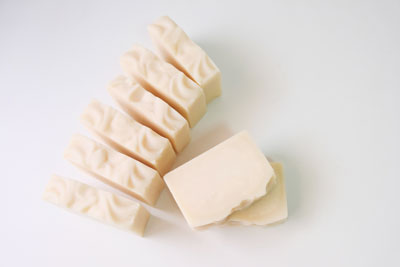

Two other soaps owe their reputation to the exchanges and upheavals of the Middle Ages: Castile soap and Marseille soap. While the former is made cold and contains only olive oil, the so-called Marseille soap is made hot, with excess soda then rinsed off. Because, contrary to popular belief, the Middle Ages were a period conducive to hygiene and body care. The Edict of Colbert in 1688 regulated the manufacture of Marseille soap: based on pure olive oil from Provence, salt and soda directly transported from Camargue, but the use of tallow (animal fat) was strictly prohibited.
With the first colonies, and the scarcity of olive oil, soap factories turned to other oils, notably palm and coconut, which produced a white or beige Marseille soap that could be used to wash delicate fabrics. In 1906, the term "Extra pure 72% oils" was defined in contrast to soaps that were beginning to be industrialized and which could contain up to 50% water. Because, from the 19th century, soap production became excessively industrialized and made it an ordinary product. Made with low-end oils, from which the glycerin was separated to sell to other industries, it contained more and more water so that it dried out the skin. Until the shortage of fatty substances at the end of the Second World War and the rise of chemistry led to the appearance of synthetic surfactants, the origin of syndets and shower gels. These products, which are less expensive to produce, are enjoying great success. Ironically, these synthetic surfactants are softened with glycerin sold by the soap industry!
Why does soap wash?
Composed of natural ingredients - vegetable oils (olive oil, palm oil, coconut oil , etc.) to which a mineral base is added (soda for a hard soap, potash for a soft or liquid soap) and possibly additions such as honey, milk, essential oils - soap has the power to fix fats in the rinsing water and therefore to wash! This is also why we say that it is a detergent. Its pH is basic: between 9 and 10 when that of the skin is at 5.5.
Soap, ecological and economical

Solid soap is more economical
Much more economical than shower gel, it lasts a long time and costs less.
Liquid soaps and shower gels are mostly water (80%). Since water is conducive to the growth of bacteria, formulators must add preservatives so that they expire less quickly, especially in humid and warm environments such as a bathroom.
Solid soaps , due to their reduced water content (soaps are not waterless as we often read) but above all due to their composition , do not need preservatives.
Moreover, a good soap made according to the rules of the art – which does not crack or melt – lasts for months when a medium-sized shower gel (500ml) rarely lasts more than a few weeks. To say, however, that a soap is cheaper is a bit of an exaggeration. Because, as we will see, a really good quality soap is now an almost luxury item. While the soap sold in supermarkets is certainly cheap, for the most part, of poor quality.
Long live zero waste!
This is largely what has determined the return to grace of the bar of soap: it is (almost) zero waste . A bottle of shower gel – even in recycled and recyclable plastic – consumes tons of plastic, thousands of liters of water, tons of CO2 to be transported, and produces waste that we do not really know if the recycling channels treat correctly (particularly shower gel tubes that are difficult to recycle). Whereas a bar of soap requires much fewer resources for its production, its transport and only requires the recycling of its paper or cardboard packaging, when it is not sold by the cut. Because, if it is produced correctly, it is completely biodegradable.
He is nomadic
The icing on the cake is that the bar of soap, provided it is dried well and placed in a net or metal box, can be easily transported in a toiletry bag when travelling, without worrying about weight or millilitres on a plane.
Soap in the ideal and other soaps….
As we have seen, since Aleppo soap or its descendant from Marseille, times have changed. Industrial or semi-industrial manufacturing methods have profoundly changed the properties of soap. The one you buy for €2 in a supermarket has nothing to do with the one you pay more than €10 for from one of the last real soap makers who masters manufacturing from A to Z.
Industrial soap making causes soap to lose its qualities

Manufacturers have long adopted the "hot" or "cauldron" method of soap making. While this is the method used for Marseille soap, they have transformed it in such a way as to drastically reduce the time taken, and therefore the properties of the soap. Thus, the drying time of the soap goes from one month to one day! This process also has a strong environmental impact in terms of water and energy consumption (it is heated between 100 and 120°C). In addition, the heat requires choosing more resistant ingredients but whose initial production is not ecological , such as palm oil. Finally, the soap is rinsed with salt water to eliminate excess soda, also eliminating the glycerin which is beneficial to the skin.
These industrial soaps are then generally reduced to shavings, the bondillons. However, today, nearly 80% of the bondillons are produced in China or Malaysia and even the soaps stamped "Marseille soaps" are produced mainly in Turkey or China.
These balls are then sent to "semi-artisanal soap factories" that do not actually make their soap but are manufacturers who will only color, mold, perfume, stamp the bars obtained in an extruder and sometimes add a little oil. The proof: a soap that melts quickly or cracks over time is not a good soap. If it softens very quickly, it is because it contains too much water and has not dried long enough during its manufacture. Its "heart" has not had time to harden.
You can still find good soaps made hot, especially in artisanal soaps from Marseille or Aleppo, made with quality raw materials, taking your time, and adding glycerin or oil (hence their name superfatted) during manufacture. You have to pay attention to the place of manufacture and do not hesitate to ask questions to the reseller.
Cold saponification is preferred but rare
As its name suggests, cold saponification is done without cooking. But this method cannot be industrialized, because it requires excellent quality raw materials and a long time, since it takes more than a month to produce a soap. The oils and soda are mixed and emulsified before being put into a mold. Saponification creates an exothermic reaction at 60/65 ° C, which preserves the properties of the oils. Then comes the "cure", that is to say the resting period of the soap which lasts 4 to 5 weeks, during which the soap dries and stabilizes, because saponification continues until one of the reagents (soda or oils) is used up and glycerin is naturally produced during this process. This process is not very water and energy intensive, but the soaps are biodegradable and combine detergent and moisturizing properties since they keep about 10% glycerin as well as the unsaponifiables (as their name suggests, the ingredients that do not become soap): vitamins, terpenes, squalenes, phytosterols, etc. with nourishing, softening, protective, antioxidant effects. The problem: you can't find this type of soap in supermarkets because they are produced by small entities and are sold for more than €5 each.
Is soap really good for your skin?
Who has never left a dermatologist's office and been prescribed to wash with a good Marseille soap? And what can be said in response to this prescription from a skin specialist, who may have forgotten that soap is, by definition, alkaline or basic, and therefore not in line with the pH of the skin ? The proof: when washing with a basic soap (in both senses of the term), you come out of the shower with skin that creaks, that does not slide when you run your hand over it, and becomes rough if you do not assiduously cover yourself with moisturizer.
This is why soap is said to "strip": it damages the hydrolipidic film that protects the skin and the skin dries out as a result. Only soaps that have retained their glycerin can avoid this problem.
But here again, be careful with perfume and essential oils which, even if they are rinsed, can cause reactions on certain very sensitive skins. As for damaged or atopic skins, whose skin barrier is altered, they must be particularly attentive to the composition of the soap they use.
So, should we go back to soap? Yes, but only good old soap, made as it was in the past, according to the rules of the art, with a long manufacturing and drying time, and quality oils, pure and virgin. And not industrial soap, full of water and emptied of its glycerin.
The problem lies in the difficulty of distinguishing a good old soap from an industrial soap, because even the soaps called " Made In France " are, in reality, only made in France! Otherwise, opt for the superfatted bars in the pharmacy.

Skin microbiota: what exactly is it for?

Since the success of the book " The discreet charm of the intestine " by Giulia Enders, and that well-known yogurts were said to do it good, we know that there is an intestinal microbiota . But we are in fact hosts to many other microbiotas, including that of the skin. However, we are gradually discovering that the skin microbiota intervenes in many mechanisms of the skin.
About ten years ago, researchers made a major discovery: we are only half human! What does that mean? As Richard L. Gallo, from the Dermatology department at the University of California, San Diego, explains: "Each of us is actually a community made up of 50% human cells and 50% microorganisms." These microorganisms, which constitute microbiotas, are present everywhere in our body: there are microbiotas in the intestines, but also on and in the skin, in the vagina, the mouth, on the scalp, etc. Microbiotas, these invisible living ecosystems, are in fact part of our identity and are unique to us, just like our DNA, and we live in symbiosis with them.
All of these microorganisms weigh about 1.5 kg for a 75 kg person.
Researchers are now trying to understand the skin microbiota, its interactions with skin cells, its influence on certain dermatological pathologies and how it can influence a new approach to cosmetics.
Microbiota or microbiome?
"The microbiota is the set of living microorganisms detectable on the skin (bacteria, viruses, yeasts), the microbiome is their entire genetic heritage," explains Richard Martin, who has been working on the subject for many years. Indeed, it was by deciphering the human skin genome twenty years ago that Professor Richard Gallo discovered that of the microbiota. Because it is their DNA imprint that allows them to be identified and recognized.
The skin microbiota, an ecosystem in symbiosis with our skin…
It was called skin flora when we did not yet have the adequate tools to study it in detail. It is in fact a real ecosystem that lives on and in the skin, composed of probiotics: mainly bacteria (75-80%), but also viruses (10-20%) and yeasts (5-10%). Each cm² of skin is covered with a million of these microorganisms, or 100 billion in total, which either collaborate or compete. In fact, these numerous microorganisms are not only on the surface, because they slip into all the crevices, from the pores to the pilosebaceous follicles. The most represented are cutibacterium and staphylococcus epidermidis, but there are about 1000 varieties. They live in perfect symbiosis with our cells and feed on skin secretions (lipids from sebum, proteins from dead cells, sugars, water from sweat, etc.).
…which varies depending on areas, age and environment
Transmitted by the mother during vaginal delivery, the skin microbiota is enriched and evolves with each major hormonal change (adolescence, pregnancy, menopause/andropause). But it also differs depending on the part of the body (scalp, armpits, arms, etc.), because, as with plants , some varieties acclimatize better to dry environments (arms, legs), others to humid regions (mucous membranes, armpits, folds, etc.), or oily regions defined by the quantity of sebum (inside the ears, scalp, face, etc.). Age, but also gender and ethnic origin, cause the “populations” to vary. External factors also have a great influence: temperature, humidity, pollution ,diet , and even the people, animals and plants we live with influence its composition. Thus, we do not have ONE but MANY skin microbiotas.
A determining role in skin health

The microbiota preserves the integrity of the skin barrier by strengthening it but also by organizing itself as a sort of protective film that prevents the entry of "intruder" viruses and bacteria. It has many roles: it maintains the pH of the skin around 5.5 (but so-called pathogenic bacteria prefer basic pHs, around 8), it stimulates the skin 's ability to adapt and its cell renewal, regulates its immune system that it educates to protect us, and promotes healing and repair. It also causes the secretion by skin cells of antimicrobial peptides (which are like little soldiers that will attack intruder bacteria to destroy them), antioxidant, antibacterial and anti-inflammatory substances. In short, the microbiota plays a decisive role in the good health of the skin .
When the balance is broken, pathology sets in.
This discovery leads to the need to rethink our relationship with skin care . "Twenty years ago, we thought that viruses and bacteria caused diseases. However, we now know that the health of the skin depends on the balance between these probiotics within the skin microbiota," explains Richard L. Gallo. In fact, as soon as one variety takes up too much space or takes over, it creates an imbalance called dysbiosis, which often leads to inflammation or even pathology. Indeed, we now know that eczema, acne or dandruff in particular are linked to an imbalance in the microbiota caused and accentuated by what characterizes our post-industrial life: pollution, taking medication, stress , UV rays, excessive hygiene and certain cosmetic components . A study conducted in Hong Kong, comparing 204 women living in two Chinese cities, one polluted, the other not, showed that the microbiota of women living in a polluted environment and showing signs of premature aging strongly resembled that of older women. It is therefore very likely that the microbiota also influences skin aging.
However, a healthy microbiota – and therefore healthy skin – is a microbiota with good biodiversity where the families of bacteria balance each other, “get along” well and interact favorably with the skin cells.
How to maintain a healthy microbiota?
- Limit periods spent underwater, i.e. not too long or too hot: because water has a basic pH, greater than 7, which destabilizes the microbiota.
- Washing with the right products : the discovery of these "beneficial bacteria" has changed the "hygienic" vision that we have had for over a hundred years. No more question of "bactericidal" products at all costs. Because shower gels with overly aggressive surfactants unbalance the microbiota which takes over 4 hours to rebuild after each shower. So, one shower per day maximum, and with the gentlest possible cleanser.
- No soap or product with the wrong pH: the famous Marseille soap, or any other soap, has a basic pH (above 7). However, the skin has an acidic pH. We therefore prefer a superfatted bar. Similarly, we choose products called "physiological pH" and not "neutral pH", which means that it respects the pH of the skin while a neutral pH is 7.
- Do not touch your face too much so as not to bring in “external” and potentially pathogenic bacteria.
- Avoid cosmetics that are too aggressive or at least limit their use, such as grain scrubs, cosmetics that contain a high level of alcohol or fruit acids.
- Remove make-up gently, without being harsh, without rubbing, avoiding the aggressiveness of cotton wool . And in the morning, do not remove it: a suitable floral water is enough.
“Cosmebiotics” to preserve the microbiota

The discovery of the skin microbiota also leads to a new vision of cosmetics. Now, we look a little more closely at cosmetic formulas and try to formulate them in such a way as not to disrupt it. To do this, we limit or even eliminate certain ingredients that could cause an imbalance, such as mineral oils and silicones, but also emulsifiers (which foam like sulfates) and emulsifiers (which bind emulsions, creams or fluids). Preservatives have also been blamed, but it would seem that they ultimately have no impact on the microbiota. A step further, some brands seek to regulate and rebalance the skin microbiota. To do this, we now find prebiotics, probiotics and postbiotics in certain ranges:
- Probiotics : these are the living microorganisms (bacteria, yeasts in particular) that make up the microbiota and promote its good balance. But because a cream is not a yogurt, it is not kept cool and it is not consumed immediately after opening, it cannot contain real living probiotics. However, for marketing convenience, cosmetic brands indicate "with probiotics". These are in fact fragments of probiotics deactivated either by heat or by fermentation that are recognized and assimilated by the skin's probiotics. Most of the time they are the same as those used in food for the intestinal microbiota: lactococcus, bifidobacterium, lactobacillus, etc. They have an anti-oxidant and anti-inflammatory role and help to reconstitute an ecosystem beneficial to the microbiota.
- Prebiotics : these are simple or complex sugars, fatty substances or amino acids, which nourish and promote the healthy development of skin bacteria. For the microbiota, prebiotics, particularly interesting in cosmetics, act a bit like a fertilizer. They are found in more and more products. The most common is inulin, from chicory. There is also yakon. But we are gradually discovering that certain ingredients, long used in cosmetics, also have a prebiotic role: this is the case for glycerin, but also squalane and polyphenols.
- Postbiotics : these are molecules secreted by probiotics (their waste products, so to speak, metabolites or membranes of these probiotics), which mimic them and promote their good activity. They also promote the ecosystem in which a healthy microbiota lives. Lactic acid is one of them. But some dermo-cosmetic brands develop their own, tailor-made, often from bacteria cultivated in their thermal water, to target a specific problem: acne, atopy, dry skin, etc.
If we are only at the beginning of cosmetics linked to the skin microbiota, it is because the discovery of the skin microbiota is only about ten years old, and even if its study is progressing rapidly, we are far from understanding all of its mechanisms and the extent of its influence.
Not to mention the discovery of the links between the microbiotas of the brain, intestine and skin, which are closely connected. Cosmetics personalized according to the microbiota are still (science)fiction, the application of live bacteria can only be done in the laboratory… But taking into account the balance of the skin microbiota by hygiene & care products is a step forward that contributes to making formulas cleaner .

How to protect your skin from pollution?
Pollution is everywhere. Outside, in the city and in the countryside, but also inside homes . If it deteriorates your health, it seriously and insidiously damages your skin. The best strategies to save face by respecting the rules of clean beauty and without polluting the planet .
In the city, your skin, which has an estimated surface area of 2 m², is covered in urban dust, 24 hours a day, every day of the year. Just slide your finger over the body of a car to imagine what your skin, and especially your face, goes through. This urban pollution contains an explosive cocktail of more than 200 chemical substances, mainly pesticides, heavy metals, dirt, exhaust fumes, tobacco smoke, candle smoke, building components, interior solvents and paints , and the famous fine particles.
This phenomenon, which affects 92% of humans who live in cities, is the third leading cause of death in France after alcohol and tobacco, not to mention the role it plays in respiratory and cardiovascular diseases, allergies and even certain cancers.
But let’s get back to the skin, how can we protect it effectively while respecting the principles of clean beauty ?
The damage of pollution on the skin
Experts estimate that today, pollution is responsible for 80% of skin aging. The remaining 20% is the consequence of aging inscribed in the cells. This exogenous and premature aging is nicknamed Polluaging.
Substances due to pollution attach to the surface of the skin. They damage the sebum, which causes acne attacks in some people, especially during pollution peaks. They also alter the quality of the hydrolipidic film and the stratum corneum, so that the skin , less well protected, is more sensitive, more reactive, more vulnerable.
When all these pollutants stick to the skin, they dissolve and trigger a whole series of oxidative reactions that damage the deeper cellular structures of the skin. The consequences? Acne, blackheads that clog pores and cause blemishes, but also dry skin, synonymous with loss of radiance and discomfort, alteration of the elasticity and tone of tissues, not to mention brown spots and dull complexion.
How to effectively protect your skin with clean beauty?

It's true, the skin has its own natural defense system. In addition to the stratum corneum and the hydrolipidic film, it contains a pool of antioxidant substances to block the path of free radicals , real little energy bombs that damage all skin structures in their path. The skin's antioxidant substances are vitamins, mainly C and E, and specific enzymes that block these free radicals to stop them in their mad rush.
But when the skin is attacked strongly, and for too long, its antioxidant reserves are depleted. It then shows signs of fatigue and aging. Two ways can help it: the cutaneous route using cosmetics and the oral route with the "Clean Eating " diet.
Clean cosmetic care rich in antioxidants
Beyond the mention "anti-pollution care", look closely at the list of ingredients that indicates the composition of the product. Choose a short list of ingredients but which mentions the presence of antioxidants known to trap free radicals (which alter proteins, lipids and DNA of skin cells). Prefer organic or natural ingredients, especially vegetable oils . And this, in the day cream as in the night cream.
- Vitamin C, or ascorbic acid, a powerful anti-free radical which also ensures healing, the formation of collagen and reduces the appearance of brown spots.
- Vitamin E, or tocopherol, which prevents the oxidation of lipid structures that form cell membranes to preserve their fluidity. This “anti-aging” vitamin regenerates the skin and preserves the radiance of its complexion.
- Vitamin A, which is not a true antioxidant but an anti-aging active ingredient that helps the skin to renew itself despite the attacks of pollution.
- Plant-based polyphenols that are both antioxidant and anti-inflammatory.
- Moisturizing substances
Avoid controversial substances : CMR ingredients (carcinogenic, mutagenic and toxic for fertility), endocrine disruptors, nanomaterials, irritants and allergens. That is, parabens and phenoxyethanol, silicones, mineral oils (extracted from petroleum), some foaming surfactants like SLS sulfate, alcohol, perfumes, EDTA preservative, PEG polymers.
Beyond the composition, check that your cream is manufactured in a short circuit ( made in France ) preferably according to the green chemistry process. Finally, take a look at its packaging which must be environmentally friendly with a minimum of packaging, recyclable or recycled, biodegradable with a minimum carbon impact, as is the case for carbon and glass.
Gentle, twice-daily cleansing
An essential step, cleansing or removing make-up , morning and evening, removes a good part of the pollutants fixed to the skin. Be careful not to rub too hard to prevent the pollutant particles from scratching the epidermis, attacking it and increasing its sensitivity.
Finally, don't forget that the skin recharges itself with antioxidants internally through diet. Choose fruits and vegetables of all colors, seasonal, organic and grown in short circuits near you.

Facial massage, the cleanest of treatments
Why not take a moment during your beauty ritual to massage your face? When it comes to anti-aging, it's all good! Our expert, Tatiana Justeau, a certified specialist in facial gymnastics, explains.
With the trend of facialists , we are talking more and more about the importance of having a facial massage. But, you can also do it yourself in front of your mirror at home. The right gestures and precautions to take with Tatiana Justeau , certified specialist in facial gymnastics and author of " La gymnastique faciale " (Ed. Eyrolles).
Respect your face
"Every woman has a different facial journey," explains the pro. As a result, at 30 or 60, the needs are not the same. "For example," continues Tatiana Justeau, "the frequency varies. At 60 and over, I recommend a daily massage, a gesture that is not recommended for younger faces." Indeed, massaging too often, especially with a draining massage technique, risks making thirty-somethings lose the roundness and plumpness that give their face that fresh look. That would be a shame!
- Tatiana's advice : don't hesitate to contact a facialist or facial gymnastics expert on social media (like @tatianajusteau_faceworkout ), to find out the frequency of massage that suits you. In addition to age, the expert will take into account the shape of the face, the placement and importance of wrinkles and signs of aging.
Adopt the right actions
– On a clean face.
Facial massage is always performed on a perfectly cleansed face , with clean hands. What care should you use to massage yourself? "I do not recommend using a makeup remover oil that is designed to remove makeup. I opt for certain vegetable oils ," explains Tatiana.
The best? Hemp, plum or fir oil. To avoid: sweet almond and coconut oils, a little too greasy for massage. Also remember to check that the chosen oil is not comedogenic.
– Following the lines of the face.
Then, simply place a few drops of oil in the palm of your hand to warm it. To apply it to the face: do not spread it by stretching but by gently pressing with your fingertips. The important thing? Massage while respecting the lines of your face. The movements are always carried out in the direction of the inside of the face towards the outside, slightly going up towards the temples and the top of the forehead. Be careful not to stretch the skin while massaging because this risks stretching it. Similarly, do not pull the skin downwards (so as not to accentuate the harsh law of gravity). The only exception: the neck supports movements from top to bottom to facilitate drainage.
– By targeting needs.
Depending on your signs of aging (wrinkles around the eyes, mouth, etc.), you can focus your movements on specific areas. If you are losing firmness, focus mainly on the contours of your face that are sagging. You can use your fingertips to gently "pinch" the outside of your face, the palms of your hands to smooth, or closed fists to firm.
– By remaining firm and gentle.
The pressure applied should be both firm enough, but not rough, and gentle, but not soft. This will allow you to effectively act on all the small muscles of the face. To give you an idea, on a scale of 1 to 10, the right pressure is around 3 or 4.
– By focusing on regularity.
Obviously, when you leave a session with the facialist, you show off a face that has gained (or lost) ten years. At home, you will have to be a little patient and... regular. Plan a session, morning or evening, two to three times a week, between five and ten minutes, to see quick results.
- Tatiana's tip : once the massage is finished, remove the oil used. In fact, the skin may have released impurities while being massaged, which will mix with the dust and remain stuck to the face. The right move? Dab the entire face with a glove soaked in hot water. Then, once the face is clean, you can reapply oil or your day or night care.
What is facial massage for?
In fact, there are many tense muscles on the face. Regular massage serves to relax the muscles, smooth the features, and restore tone to the face. Finally, by facilitating lymphatic drainage of the face, massage has a knock-on effect on bags under the eyes!
Read on to find out more:


- Facial gymnastics , Tatiana Justeau
- My massage lesson , Hélène Campan
- Kobido, beauty treatments and other secret rituals of Japanese women , Elisabeth Alimi