


6 eco-friendly actions to do with children
Every day we try to do a little more for a cleaner planet. But how do we pass the torch to children? Here are 6 simple, eco-friendly "small gestures" to introduce them, raise their awareness and make them the future defenders of our Earth.
Children are very keen on initiatives when it comes to protecting nature, and it would be wrong to believe that they are not capable of commitment, on the contrary! They are the first to want to do well, and participate in the family's ecological actions. In this way, we help them to adopt respectful behavior and develop their ecological awareness for the future.
1- Prefer bulk shopping
We start by explaining that managing waste is expensive and polluting, but that we don't have to buy the packaged products that we see everywhere. So instead of going to the supermarket, head to the zero-waste grocery store or the organic store armed with small paper or fabric bags . We go around the aisle together, we read the labels. We show them how to position the bag correctly, and then we let them do it! We can compare the weights of the bags, show what 1 kg, 500 g is. Today, everything can be bought in bulk in certain classic stores or in specialized stores, from flour to laundry detergent! Look in your area: there is certainly a zero-waste store nearby.
- Planet benefits: less packaging and therefore less waste.
- Child benefit: learning to choose, to weigh and to understand that other choices can be made.
2- Plant flowers for insects

This activity allows you to approach with children the role of pollinating insects that transport male pollen to female flowers, the evolution of the plant into a flower and then from the fruit into a seed, and the balance between insects. All you need to do is buy packets of seeds such as "flower mix" or "honey meadow" and scatter them around the city. While walking, you target every little corner of the earth, at the foot of trees, in a park, or even on your balcony. You can also make "flower bombs" by mixing clay, coconut fibers and seeds: you form balls that you let dry and that you can then send far over the fences to see them bloom in the spring. Flowering plants provide nectar and pollen to many pollinating or auxiliary insects, thus attracting aphids, which will attract ladybugs that eat them, as well as bees, but also birds interested in flower seeds such as sunflower seeds. As a bonus: we add an “insect hotel”, a sort of small cabin to shelter them (numerous tutorials on the Internet).
- Planet benefit: contribute to maintaining biodiversity at the local level.
- Child benefit: understanding the essential role of pollinating insects in the plant reproduction chain.
3- Spend a week with the bare essentials


We will explain to children the dangers of overconsumption, that every manufactured object has used resources, polluted the planet, and that it is important to buy fewer products, but better ones. An action that will emphasize all activities that do not involve consumption: going for a walk, drawing, reading stories, finding forgotten toys, emptying the grocery cupboard and the canned goods lying around. It is also an opportunity to realize that everything can wait and to differentiate between desire and need. A 7-day challenge that challenges the whole family.
- Planet benefit: no resources consumed, no pollution generated, no waste produced.
- Child benefit: showing that we are free and that we can free ourselves from consumer society when we feel the need.
4- Create compost
Ideal for learning about food decomposition, creating a compost bin as a family is a fun and useful activity. You can simply pile up organic waste, peelings and leftover meals in a box at the bottom of the garden, but be careful, because insects are attracted. It is recommended to place a mixture of soil, hay and/or grass at the bottom of a large bin and place the waste there, which you regularly cover with plant components (weeds, leaves, soil). The goal? to create a mille-feuille of green and brown matter to obtain a nitrogen/carbon balance necessary for successful composting. This is an opportunity to explain that the soil is enriched by the waste that plants feed on and that compost is an excellent natural fertilizer.
- Benefits for the planet: lighter, smaller and therefore less expensive bins, enriched soil.
- Child benefit: understanding the cycle of nature, returning to the earth.
5- Organize a waste collection

Very simple to set up, a collection. It is really the right tool to raise awareness among young people while cleaning up nature whether at the beach, in the city, in the countryside or in the mountains. It can be done with family, friends or neighbors. We mark out an area and collect in pairs, adults/children. Provide gloves and bags. We can crisscross an area or tackle an illegal dump and take a nice photo before/after cleaning. What pride for the children!
- Benefit for the planet: less plastic and objects of all kinds that pollute nature.
- Child benefit: the "common good". It's not because I'm not the one who threw it away that I don't pick it up.
6- Launch an anti-cigarette butt operation
We can collect cigarette butts using the previous example, but with a more militant spirit. Together, we imagine communication media to encourage citizens not to throw their cigarette butts in nature: a leaflet to distribute, make pocket ashtrays, communicate around us, in our street, with shopkeepers, or the town hall to install street ashtrays. Children can also propose a presentation in class to explain that cigarette butts are made of plastic, that they do not biodegrade, that they are harmful when they end up in the sea (1 cigarette butt pollutes 500 L of water) and that they are absorbed by marine animals. Not to mention the damage to human health.
- Benefit for the planet: fewer cigarette butts, less pollution.
- Child benefit: learning to seek information and support a cause, knowing that he can inform adults.
And also:
- Make a toy or piece of furniture from recycled materials and repair a broken object to show that you don't need to buy everything new.
- Identify and refuse plastic: the bag in a store, the industrial product that you can make yourself, etc.
- Start a petition: on a worrying local situation such as an illegal dump, pollution from a company, the fate of animals in the region.
- Save water and energy by turning off lights and faucets, taking half baths or short showers, adjusting the toilet flush tank.
Children are volunteers and always ready to protect nature. If we can teach them to reduce their waste, over-consumption, and show them that we can do a lot of things together...so many seeds for a future that is more respectful of nature and more united.

Why is biodiversity in danger? How can we save it?
Long considered the poor relation of ecology , biodiversity, which plays an important role in human life, is a very worrying subject. Indeed, biodiversity is undergoing a rapid deterioration that weakens it a little more every day. Why is it in danger? And above all, what can we (still) do?
What is biodiversity?
Behind the word diversity lies the set of all varieties of all living species and ecosystems in the world. This refers to life in all its forms: animals, plants and micro-organisms whether terrestrial, aquatic, marine, of all species, of all organizations. These living organisms interact with each other and are at the origin of an incalculable number of reactions necessary for life. Each one plays a specific function within its ecosystem and thus guarantees the balance of all populations.
Precious ecosystems above all

A pond or a forest, for example, are ecosystems where living things are organized by offering a place to everyone, where the food chain benefits everyone and where all forms of life are represented. The more organisms there are in an ecosystem, the more prolific nature is, and the more inert resources can be transformed into organic resources. But the opposite is also true: the less biodiversity there is, the less favorable the ecosystems are.
Crucial importance for life
We know how much the disappearance of an animal disrupts the food chain. It is exactly the same for biodiversity. Constantly turning over the land and treating it with chemical fertilizers impoverishes the soil. Microorganisms and earthworms can no longer decompose or recycle organic matter. As a result, soil fertilization and soil aeration decrease, which promotes water absorption. Gas exchanges will no longer be able to take place and plants will not be able to develop naturally. Indeed, soil rich in living beings gives soil rich in nitrogen, an essential element for crops, which is replaced by artificial fertilizers when the soil lacks it.
An invaluable balance
Problems always arise when an action disrupts the balance. If we cut down trees that shelter families of insects or chimpanzees, the latter will die for lack of a habitat. Another example is the disappearance of bees: these insects deposit male pollen on female flowers, without them it is the reproduction of flowers, and therefore the fruits, which is disrupted.
Marine biodiversity is also vital

On the sea side, plastic pollution or large-scale pollution produce dead zones and lead to the disappearance of plankton. While plankton feeds many species, it also produces the oxygen that we breathe. Indeed, the microorganisms that constitute it absorb carbon dioxide and release oxygen: it is the same photosynthesis phenomenon as that of forests. In fact, everything is linked. And if nature nevertheless manages to keep its active systems by adapting, its backup systems are undermined. This is when entire chains of co-dependencies disappear, with, in their wake, many mechanisms that are essential for humans.
Invaluable benefits
We can imitate nature, try to repair it, but replacing its effects is impossible. However, biodiversity is what allows us to eat, live, breathe... The multiple benefits offered to humans by a rich and preserved biodiversity are the result of complex exchanges and interactions between all its actors, however microscopic they may be. This perfect balance of the earthworm that aerates the earth while allowing it to receive rainwater to water the roots of the plants cannot be recreated artificially. Artificial dikes are extremely expensive and are never as effective as tree roots in retaining the soil in the event of flooding. If these "services" provided by biodiversity were paid for, we can bet that nature would be better protected, simply to save money!
What threatens biodiversity?
Everything! Since living things are everywhere, anything that destabilizes ecosystems threatens biodiversity : pollution of the air, soil and seas, but also destruction of natural habitats due to urbanization, disappearance of forests, ice floes, etc. On the animal side, the poaching of endangered species is of course fraught with consequences, as are the chemicals that kill insects that are nevertheless terribly useful.

When conditions change too quickly, species disappear because they have not been able to adapt to their new living conditions. This was already the case in the time of the dinosaurs. Today, climate change is pushing animal populations to move to escape the heat, encroaching on the territories of other species. This is the case on land but also in water where warming will allow certain species that love the heat to develop: the loss of biodiversity then comes from the overpopulation of a species that spreads over a territory to the detriment of everything else, or whose evolution becomes out of control. Mosquitoes, for example, are very sensitive to variations in temperature and humidity and certain species that carry diseases contaminate new human populations by moving with the heat.
Pollution and global warming
Biodiversity is in danger when certain animal or plant populations are wiped out, but also when the balance of one of its ecosystems is no longer maintained. However, pollution and global warming are the two levers that have a terrible influence on ecosystems and put them to the test. Most of the dangers today are "anthropogenic", that is to say due to human activities that pollute, overexploit natural resources, destroy ecosystems and the habitats of animals that then have no chance of survival. Climate disruption linked to human activities that aggravate the greenhouse effect is one of the major dangers for biodiversity. Indeed, the climate has always been the number 1 factor in the appearance, evolution or disappearance of species. It is the climate that regulates or triggers the transformations of living things.
The accumulation of imbalances
Biodiversity can suffer several imbalances at once. For example, green algae on the coasts of Brittany invade the coastline and prevent other species from existing. If they have multiplied so much, it is because of the intensive pig and poultry farming in the region. This type of farming drastically increases the nitrate level of the water which emits phosphorus and nitrogen which they love. Indeed, not only does intensive farming use nitrate as a fertilizer for its agriculture but it also produces it through the droppings of farm animals which are also rich in nitrate. The problem arises when these green algae washed up on the beaches release hydrogen sulfide which can be fatal. An environmental and human disaster.
An unprecedented collapse of life
On a global scale, each species is more or less destined to disappear one day… but this generally takes several million years. The problem that makes protecting biodiversity so difficult today is the scale and speed of the species extinction process. Life on Earth has already almost disappeared 5 times because of environmental changes… but over a period of several million years! Today, for the first time, the disappearance of biodiversity has never been so rapid, which gives a feeling of helplessness. Such a collapse of life has never occurred in the entire history of humanity.
- According to the IPCC on biodiversity (equivalent to the Intergovernmental Panel on Climate Change), one million animal and plant species are threatened with extinction in the coming decades.
- Fish, mammals, reptiles and amphibians have never declined at such a rapid rate, a hundred to a thousand times higher than that calculated over geological time, says the WWF.
- Over the past forty years, 60% of vertebrate populations have disappeared.
- According to the latest report from the National Diversity Observatory, only 20% of remarkable ecosystems are in a favorable state of conservation.
- In France, over the last ten years, the bird population, a representative indicator of overall biodiversity, has fallen by 40% for goldfinches and by a third for birds living on agricultural land.
Why can't we go back?
The alterations of biodiversity are irreversible: extinct species will remain so, territories laid bare by mining or logging will never find virtuous soil again, the Great Barrier Reef will only be able to survive. Indeed, the disappearance or alteration of animal or plant species in an environment that retains its characteristics could see them return. Even if it means giving them a helping hand, as we try to reintroduce certain species. But today, ecosystems have for the most part lost the characteristics that allow them to accommodate life. The functioning of the oceans is altered by their acidification and plastic pollution is endemic there.
How to slow the disappearance of biodiversity?

It is estimated that it will take a century to dissipate greenhouse gases: if we stopped ALL CO2 and methane emissions today, we would gain nearly 1°C by the end of the century. A small degree that seems small but a huge variation for the coldest and warmest regions, or a degree of difference represents a real upheaval for the environment: within 1°C, the ice melts or does not melt, for example… However, the extinction of species since 1900 has never been at such a rate, representing a major biological crisis. In addition to decimating species and ecosystems without equivalent, globalization, international transport, imports and exports leave no chance for nature to be able to reconstitute what is destroyed. If we cannot stop it, we can nevertheless have our foot constantly on the brake from now on in the hope of slowing down the carnage.
Promoting biodiversity to preserve it
This is an interesting avenue to explore: beyond legal texts, beyond citizens' resistance to lobbies, beyond ecological public policies, inestimable biodiversity should be valued more in order to be preserved. Giving a financial value to biodiversity would make it possible to show (to major polluters in particular) the cost, with supporting figures, of its damage. This new tool could thus integrate ecology into the costing of projects. If we calculated the damage of each project destroying biodiversity (destruction of hectares of forest to build a hotel complex for example), we could envisage a compensation system. An idea that is starting to gain ground.
Act for local biodiversity

But in the meantime, we can change our consumer choices to avoid products whose manufacturing is very harmful to the planet: say goodbye to fast fashion and its toxic waste dumped into waterways, boycott palm oil from deforestation that is causing treasures of tropical biodiversity to go up in smoke, stop the plastic that is swarming in the sea. We can also act locally to protect the fauna and flora of our regions, sow flower seeds to help bees, promote permaculture and soil preservation, organize cigarette butt collections. All these actions in favor of nature contribute to saving what can still be saved.
Biodiversity is us and everything around us, from the smallest to the largest, and each living organism has a function in the greater whole. When we talk about "protecting nature", we are talking about biodiversity without really knowing it. Mobilizing for nature means mobilizing for us because no life is possible without biodiversity. Now is the time to move towards more virtuous practices and to respect the environment.
Biodiversity is irreplaceable, what would life be like if water was no longer drinkable, if there were no more fish in the sea?

Little dictionary of ecology
We hear about ecology every day, from social networks to press articles to the TV news. The same words are used, and repeated… but do we know what they mean exactly? To better understand ecology and preserve a cleaner planet, a few definitions are enough. Here is a very useful little dictionary!
Anthropization
Anthropization is the modification of the environment by the action or presence of man which distorts a natural environment or space. We distinguish between anthropogenic causes or factors (urbanization, industry, deforestation , road construction, etc.) and natural causes.
Atmosphere
The atmosphere is a layer of gases and particles that form a protection around the Earth. Made up of different layers (troposphere, stratosphere, mesosphere), the atmosphere is currently changing due to greenhouse gases. The concentration of these gases, which is only increasing, prevents the evacuation of heat from the rays into space.
Organic farming

So-called organic agriculture meets a set of specifications that farmers must comply with in order to receive this designation. This charter consists of a regulation that gives the main principles and an implementing text that explains the concrete obligations to be implemented on the ground. They mainly concern the absence of pesticide use and the improvement of soil fertility. Specialists recognize that this charter is not sufficient today (it still authorizes non-virtuous practices) and would like it to be reviewed.
Industrial agriculture

Industrial agriculture produces in mass - with maximum yield - using all the tools at its disposal, even if it is harmful to the environment: antibiotics for animals, pesticides, overpopulation in animal farms. It causes the impoverishment and pollution of soil and water, the emission of greenhouse gases (particularly due to the spreading of nitrogen fertilizers) and the loss of biodiversity.
Biomass
Biomass is organic matter that is available to be transformed into energy. It can be organic or plant waste, but also wood that can be used to make biofuels and biogas, or a gas produced by the fermentation of organic matter.
Biodiversity

Biodiversity (association of the words diversity and biological) evokes the variety of all species, families and subfamilies of all living organisms, animals, plants or micro-organisms. It also includes the plurality and multiplicity within different ecosystems.
Carbon footprint
The carbon footprint is a method for assessing the direct or indirect greenhouse gas emissions of a company, activity, product or individual. Developed by ADEME (the French Environment and Energy Management Agency), this calculation takes into account the different sources of emissions to identify and reduce them.
Composting

Composting is a technique of natural degradation of organic matter. The result is a substrate (compost) a 100% natural fertilizer, which enriches the soil without polluting it while ensuring the disappearance of biodegradable waste.
Nuclear power plant
In a nuclear power plant , the nuclei of uranium atoms are transformed into heat (fission process). This heat is used to produce water vapor that turns a turbine, which itself produces electricity. Nuclear power, which produces little or no CO2, is today one of the energies to be favored to mitigate global warming. The disadvantages of nuclear power are therefore not linked to the climate, but to the treatment of the waste it generates and the fear of nuclear accidents.
Climate skeptic
A climate skeptic is a person who questions whether global warming is due to human activities (totally or partially) or claims that it is only of natural origin. This can be citizens, politicians, and even scientists! Some climate skeptics think that global warming does not exist, others relativize it. In short, there are multiple variants ranging from climate deniers to climate relativists.
Degrowth
In ecology, degrowth is a way of life that aims to consume less in order to pollute less. Driven by individuals who are aware of the limitation of resources, only a reduction in consumption (and therefore production) can, according to them, still slow down the degradation of the environment.
Deforestation

Deforestation is the clearing of forests to make way for livestock, crops, urban development projects, or to harvest wood. The removal of trees and plants drives out the animals and insects that live in these areas, leading to a serious loss of biodiversity, moisture, and freshness, as well as an increase in the greenhouse effect.
Sustainable development
The principle of sustainable development designs products and services that meet needs, while limiting their impact on the environment, with the aim of preserving it for future generations. This approach, which takes into account all stages, from design to marketing to reduce pollution and waste, also includes an ethical dimension.
Ecocide
In the news recently so that it is considered a crime, ecocide is the destruction, damage or irreparable ecological damage caused by man to an ecosystem and which leads to its annihilation. In general, it involves overexploitation or serious negligence.
Ecoanxiety, “green depression” or “solastalgia”
Ecoanxiety is a term that refers to overwhelming anxiety or worry about environmental changes and the prospect of the consequences of global warming. It can manifest as fear, sadness, or despondency about a world that seems to be destroying itself.
Ecofeminism
Ecofeminism is a movement that links the oppression of women by men and the destruction of the planet by society, seeing both phenomena as consequences of capitalist patriarchal domination.
Circular economy

What we call circular economy is a system that aims to reduce the impact of consumption on the environment by using all possible means to extend the life of products to avoid re-purchase. Through exchange, repair, transformation, rental, loan, recycling, we can establish a virtuous circle.
Greenhouse

The greenhouse effect comes from the trapping of part of the heat from the sun's rays by CO2 and methane (greenhouse gases) in the atmosphere at the moment when these rays should be released back into space in the form of infrared, after being reflected on the Earth. The greenhouse effect, initially beneficial since it allows the heat necessary for life to be conserved, becomes problematic when the gases are too large and retain too much heat, which causes the Earth's temperature to increase abnormally.
Ecological footprint
The ecological footprint , calculated by analyzing the life cycle of a product, determines the balance of the ecological impact that it causes to the environment. It takes into account the energy consumed, the pollution generated, the resources used from the raw materials necessary for its manufacture, during its use until its end of life in terms of waste.
Collapse
The collapse of a civilization occurs when it can no longer provide for the needs of its population following one or more major crises. In ecology, we speak of the collapse of the thermo-industrial society following the consumption of resources on which it is dependent and which is running out.
Fossil energy
Fossil fuels are produced from oil, coal or natural gas, which are called fossil fuels because their stock is limited. These resources are considered non-renewable because they are the result of geological processes lasting several million years. Their combustion, which generates CO2, explains why they are responsible for a large part of the greenhouse effect and global warming.
Renewable energy

Renewable energies come from infinite resources (sun, wind, water). They produce little or no CO2: they are said to be “decarbonized”. They only produce electricity and cannot replace oil, except for devices that need electricity to operate.
Gray energy
Grey energy is the energy used upstream of the use of a product, that is to say the "hidden" energy expenditure used for the production, transformation, transport or extraction of raw materials. A finished product may consume little energy in use, but have required a lot of it.
Primary and secondary forest
The so-called primary forests have not been modified by human action, they are natural. Secondary forests have been impacted by man through felling, the integration of crops or modifications that have destabilized certain species.
Greenhouse gases
"Greenhouse" gases are gases that prevent the heat of the sun's rays received by the earth from escaping into space once they are transformed into infrared. These are mainly CO2 or carbon dioxide, methane, nitrous oxide, but also water vapor and ozone.
Greenwashing
Greenwashing or "green washing" in French translates as eco-bleaching. This technique is used by some companies to try to camouflage their ecological damage. Greenwashing then puts forward minimal ecological arguments to reduce the polluting dimension of a product, either with campaigns that display an eco-responsible image to the general public, or by deliberately misleading the consumer with false information. This practice, considered as false advertising, is regulated by the ARPP (professional advertising regulatory authority) and ADEME (environment and energy management agency).
Low tech
"Low tech" or "low technologies" as opposed to "high tech" are simple, ecological and economical solutions, which use means accessible to all to replace polluting or energy-intensive technological concepts. These low tech are associated with Do It Yourself in particular, because they rely on manual manufacturing, repair, upcycling, recycling and the diversion of objects. It can be a solar oven, dry toilets or quite simply... a bicycle!
Acid rain
Rain becomes acidic in the atmosphere when it meets sulfur dioxide and nitrogen oxide emitted by factories and cars. Precipitation is then a real threat to the environment because it alters the soil, fauna and flora, but also waterways, and even buildings.
Permaculture

Permaculture is a philosophy, the global way of considering man, nature and drawing inspiration from its mechanisms. This word "permaculture" mainly refers to an agriculture that uses biodiversity to develop in synergy with nature in a virtuous system. By relying on sustainability and resilience, it claims a global approach where man acts according to the ecosystems from which he draws inspiration.
Carbon sinks
A carbon sink is a natural system that absorbs and stores CO2 (carbon dioxide) in biomass to reduce its concentration in the atmosphere. The main carbon sinks are the seas and forests, which use the sun's energy to fix CO2 in the form of organic matter through photosynthesis.
Global warming

Global warming (but also change) is a regular and global evolution of temperatures on the surface of the globe. This natural evolution has been greatly accelerated by pollution and the emission of greenhouse gases caused by human activity. This global warming, almost out of control today, is forcing humanity to face catastrophic situations.
Sobriety
Sobriety is a concept linked to that of degrowth. It includes self-censorship and the limits that we set ourselves in terms of consumption and use of resources. It is also an expression used to express a societal objective using frugality, moderation in terms of production, and "energy sobriety". The word also evokes de-consumption and energy saving to reduce greenhouse gas emissions.
Forestry
Silviculture characterizes the methods of sustainable exploitation of forests. It refers to virtuous practices (reforestation, conservation) which make it possible to derive a profit while preserving and optimizing forest capital. These ecological benefits preserve forests in a long-term vision.
Traceability
Traceability is the ability (or not) to have all the information on a product at each stage of its production, from the raw materials used. Traceability allows us to know, for example, if subcontractors are involved in the life cycle or if a product is really "made in France" or simply assembled in France.

The benefits of a clean home
Home is a bit like an extension of yourself. We already spend a lot of time there (even more today). Four walls also reveal our way of living , of considering space and our relationships with others. Decluttering, tidying, sorting, cleaning … It feels great! Instructions.
A healthy environment
Cleaning and tidying your home is already taking care of the environment in which you live. The air you breathe is vital, hence the importance of airing it regularly , but also of choosing your household products carefully (non-toxic, etc.). As a matter of common sense, cleaning also helps to avoid living in a house full of bacteria and microbes.
It's good for morale!

Could tidying up be the new personal development therapy? Yes, if we know that cleaning, sorting, tidying up are ultimately fulfilling actions (what a joy when it's finally over!). The reason? As withsport (yes!), tidying up and cleaning use our entire body. However, when faced with this physical effort, our brain releases endorphins, a source of well-being. And the happiness effects can be all the more impactful on our concentration if we take these extremely difficult tasks to heart, by connecting to the present moment, to the here and now. Hey, could cleaning be similar to meditation ? The benefits are all the more important because they last over time (once tidy, the room remains spotless for at least a few hours, or even a few days).
In addition, it allows us to “master”, to regain control over a part of our life. What if tidying up allowed us to better plan ahead and get off to a good start?
A way to lighten the mind
Tidying up, sorting, cleaning allows you to empty your home… but also your head. That’s the key. Are you the type of hoarder who says “it can always be useful”? And in your life, aren’t you also a hindered person? Are you really at your best? Our way of tidying up and not tidying up reflects our personality, our way of being in life and sometimes also in specific periods of life. Do you remember the state of your apartment after a painful breakup? Did you want to empty it? Or on the contrary did you let yourself be overwhelmed by the disorder (and emotions)? Decluttering your home means taking control of yourself, doing something for yourself.
More time for yourself

Of course, the first "big" tidy-up takes time. Then, you just have to be regular. And the benefits are felt every time you walk through the front door. Living in a healthy environment is more restful and relaxing than living in absolute disorder. No longer searching for your things for hours allows you - ultimately - to save time to do something else (read for example, in a harmonious room!). And what about the end of conflicts and arguments at home? "But where did you put the remote control?" "Tidy your room" "Have you seen your mess!"
A boost of energy
In Feng Shui , the circulation of Chi (or Qi) is an important concept in the home. This energy that enters through the door must energize all the inhabitants of the house. However, the action of this beneficial breath is limited in a cluttered place (normal, the Qi bumps into badly placed objects or furniture like we do). According to this Chinese philosophy, a healthy and tidy house promotes the Qi and energy of all its inhabitants. More and more tidying specialists also mention the mental load linked to clutter (visually, for example, it is very tiring to live in an uncluttered environment). Not to mention all the actions linked to the objects that clutter us: we must clean them, put them away, take care of them.
Awareness for the planet
When we start to tidy up and sort through... we realize how many objects (often useless) we accumulate. Result? When we adopt this new way of living, we think twice before buying. A first step to becoming minimalist!

What is green chemistry?
Created in the 1990s, green chemistry promises to design and develop products (and chemical processes) to reduce or eliminate the use and synthesis of hazardous substances.
According to the CEA (The French Alternative Energies and Atomic Energy Commission), green chemistry is inspired by the concept of sustainable development . It integrates the optimization of the efficiency and energy cost of processes, the economy and recycling of raw materials and by-products from chemical reactions. Green chemistry also aims to reduce ultimate waste with, of course, the reduction of their impact on human health and the environment.
Reducing the chemical footprint first and foremost
Green chemistry - also called sustainable chemistry, ecological chemistry, or renewable chemistry - provides principles to reduce and eliminate the use or generation of substances harmful to the environment . This approach is done with new "clean" chemical processes, i.e. environmentally friendly. After the development throughout the 20th century of industrial chemistry from hydrocarbon derivatives, it must move towards more virtuous principles in order to preserve the environment as well as human health (in the face of the growing number of pathologies: cancer, diabetes, Alzheimer's disease, autism, etc.).
Moreover, one of the major challenges of this green chemistry is the reduction of the massive production of so-called CMR substances (carcinogenic, mutagenic, toxic) or endocrine disruptors .
The other major challenges of this green chemistry are:
- Reducing dependence on non-renewable energy and the carbon footprint of industries
- The problem of decomposition of landfill waste
- The desire to take advantage of certain abundant and unused resources, such as carbon dioxide.
Respect the twelve founding principles of green chemistry

The concept of green chemistry emerged in the United States in the 1990s. In 1998, Paul Anastas and John Warner, researchers at the American Environmental Protection Agency (EPA), laid the theoretical foundations of this new discipline by publishing a book setting out 12 founding principles.
1. Prevention
It is better to avoid producing waste than to have to treat or dispose of it later.
2. Economy of atoms
Implementation of synthesis methods that incorporate into the final product all the materials entering the process.
3. Design of less dangerous synthesis methods
Where possible, synthesis methods should use and produce substances that are low in toxicity (or non-toxic) to humans and have no consequences for the environment.
4. Design of safer chemicals
Development of chemical products that achieve the desired properties while being as non-toxic as possible.
5. Less polluting solvents and auxiliaries
Refrain from using synthesis auxiliaries (solvents, separating agents, etc.) or choose harmless auxiliaries when necessary. Unconventional activation methods can be used: use of water as a solvent, supercritical fluids, microwave heating, replacement with ionic liquids, etc.
6. Energy efficiency research
The energy expenditure required for chemical reactions must take into account its impact on the environment and the economy in order to be reduced to a minimum. As far as possible, synthesis operations must be carried out under ambient temperature and pressure conditions.
7. Use of renewable resources
Use a natural resource or a renewable raw material rather than fossil products, as far as technology and economics allow.
8. Reduction in the number of derivatives
Avoid, if possible, the unnecessary multiplication of derivatives which require a surplus of reactive agents and can produce waste.
9. Catalysis
Prefer catalytic solutions that are recyclable. A catalyst is a substance added to a chemical solution to carry out the chemical reaction. It accelerates the reaction rate by lowering the energy and comes out unchanged from the chemical process, which is why it is recyclable.
10. Design of products for degradation
Chemicals must be designed to break down into harmless biodegradable waste at the end of their use.
11. Real-time observation to prevent pollution
Observation methods must be improved to enable real-time monitoring and control of ongoing operations, and to control their follow-up to identify any formation of dangerous substances.
12. Fundamentally more reliable chemistry
The choice of substances and their chemical processes must anticipate the risks of accidents (dangerous emissions, explosions and fires).
The victories of green chemistry
In 2005, Japanese chemist Ryoji Noyori identified three keys to promoting the development of green chemistry: the use of carbon dioxide (CO2) in the supercritical fluid state as a "green solvent", aqueous hydrogen peroxide to purify oxidations, and hydrogen in asymmetric syntheses.
Interestingly, chemists have discovered that when CO2 molecules are kept in a transitive state (an intermediate state between liquid and gas), this gas acts as an industrial refrigerant. Applications of this so-called “transcritical” CO2 include refrigerating supermarkets, food processing plants , warehouses, ice rinks or delivery trucks.
So, if chlorofluorocarbons and hydrofluorocarbons (greenhouse gases commonly used for refrigeration) are replaced by this famous transcritical CO2, the ecological impact is reduced by around 15%.
In cosmetics , this transcritical CO2 is used in the green process of extracting odorous molecules to produce perfumes. It also allows decaffeination.
Bioengineering is also a promising technique with the realization of chemical processes inside organisms (living cells).
Polyethylene (PET), light and strong, is the most widely used plastic (water and shampoo bottles, bags, packaging). With its extremely stable molecular structure, PET is difficult to degrade. But Japanese researchers have discovered a bacterium that breaks it down and even enzymes that accelerate this decomposition process!
In California, Stanford researchers have found a way to produce plastic without using oil, using CO2 and industrial by-products or agricultural waste (fibers from carrot juice production).
Although chemistry and green seemed incompatible at first, it is clear that green chemistry has succeeded in reducing the production and use of some materials that are dangerous for both humans and the planet. But it still has a long way to go.

Electric car: 5 questions to understand everything
The electric car has already been much talked about. First presented as an almost miraculous alternative, we quickly heard criticism. The answers to your questions.
What exactly is an electric car?
It is a car that runs on a battery integrated into the vehicle, unlike conventional so-called "thermal" cars which run on petrol or diesel.
There are different types of electric cars, such as the hybrid car, which has a combustion engine and an electric motor that recovers energy during braking, transforms it into electricity and powers the battery. The hydrogen car produces its own electricity using a "fuel cell" that transforms this hydrogen into electricity. Intended to replace traditional combustion cars, electric vehicles are part of the energy transition, both to replace oil, the resources of which are dwindling, and to reduce CO2 emissions, which are largely responsible for climate change. But they are not perfect... unfortunately!
Is an electric car more polluting than a conventional car?
No, since the electric car does not have an exhaust pipe and therefore does not emit CO2 when it is running. However, the life cycle analysis of an electric vehicle reveals that its manufacture emits more greenhouse gases and requires more energy than a thermal vehicle, because of its battery and its more sophisticated electric motor. To know which of the two is the least harmful ecologically speaking, it is also necessary to take into account the number of kilometers they can travel (which depends on the model), the weight of the vehicle, the impact of the components, recycling at the end of life, etc. A real headache, because the extraction and refining of the metals needed for the batteries, as well as the electronic production of the electric car, also involve soil and water pollution . On the other hand, when the engine provides a large part of the so-called "regenerative" braking, the electric car releases fewer fine particles, from the friction of the tires on the road and the brake pads, than other cars. Finally, whether it is thermal or electric, the most ecological car is above all the lightest, this is the first criterion to take into account. An electric SUV is not preferable to a thermal city car.
Do electric cars have the same ecological impact around the world?
Absolutely not! Because the electricity used by the car (the one that comes from the charging station) is produced from different energy sources depending on the country. Electricity can actually be produced from polluting fossil fuels such as coal, fuel oil (oil) and gas, or via "green" or "decarbonized" energies such as nuclear, hydraulic and renewable energies (solar, wind, geothermal, biomass, etc.) which do not emit greenhouse gases. Each country uses a mixture of these energies to produce all of its electricity. Thus, an electric car recharged in France, where electricity is produced 75% from nuclear energy, involves very low CO2 emissions. On the other hand, an electric car in China or India consumes electricity produced mainly from coal, the most polluting energy in terms of CO2 and fine particles.
Why are electrical components and batteries problematic?
Electric motors and batteries are the cause of increasing mining pollution due to the large quantity of metals they require for their manufacture. The extraction of these metals, also called "rare earths" (lithium, cobalt, aluminum, copper, etc.), is particularly responsible for intense pollution of soils and groundwater. Metal deposits are overexploited in countries that often have few stringent environmental standards, and to the detriment of populations , including children who are sometimes exploited to work in these mines. Add to this the enormous energy consumption linked to mining and the storage of highly toxic residues that are most often released into nature or the sea, deforestation due to the creation of mines that trigger soil erosion and depletion, and all the threats associated with biodiversity, the electric car cannot be described as an "ecological" vehicle, far from it.
Is it desirable to replace all cars with electric ones?
No, this would not be desirable for all the pollution caused.
With 100% electric cars, it would also be necessary to be able to meet the power demand of millions of vehicles that could plug into the network at the same time to recharge, which could cause the electricity network to collapse and cause a massive failure or "blackout" across an entire region, which has already happened in Norway.
Furthermore, there is a risk of a rebound effect: the user, who has a good ecological conscience , wants to make the purchase of his electric vehicle profitable and uses it more, more often. A phenomenon already observed in Sweden and Norway, countries where the widespread electric car is used for short journeys, instead of walking or cycling. A use that goes against the limitation of pollution and global warming unlike carpooling, public transport and especially the reduction of travel.
The electric car is therefore not THE solution. It has its flaws, but the merit of being an innovation to be improved. Particularly in terms of rare earths, the exploitation of which is extremely polluting, and which risk running out very quickly as it is so difficult to extract them, whereas they could be recovered and reused if the batteries were recycled.

Being green on vacation
The holidays are the perfect time to continue your eco-friendly resolutions. It's also a unique opportunity to pass them on to your family and friends. Here's your little eco-friendly holiday notebook!
Holidays + nature = ecology
Whether at the sea, in the countryside or in the mountains, the proximity of nature and its wonders naturally makes you want to preserve it. Even if you are not a disrespectful tourist who leaves his cigarette butts in the sand or his packaging in the forest after a picnic, these irresponsible attitudes make you even more aware of the urgency to change these behaviors. Take advantage of the holidays to perform respectful and protective actions every day and share them with those around you.
Holidays in France = holidays without a plane


Choosing a destination that is accessible without a plane is important to avoid increasing the carbon footprint, and therefore global warming . Even a long car journey can never compete with a plane journey, even a short one, in terms of greenhouse gas emissions. So for the holidays, we are counting on the beautiful national spots, from Brittany to Corsica via Paris, the Jura, the Vendée or the South, France has gems to discover!
Sorting your waste on vacation
Even though we know that recycling is not miraculous and that the real solution remains zero waste consumption as much as possible, we still look for places and sorting instructions on vacation. Those who are used to their 3 trash cans will travel a few kilometers to find the recycling bin, campsite customers will make the effort to go outside to throw away their waste correctly if there is no sorting on site, and vacationers at the hotel will ask at reception what is planned.

Consume local on vacation
It's time to abandon the (bad) habit of going to the supermarket and opt for local shops, small organic stores, markets and local producers who sometimes sell on the farm or in short supply chains. Ask at the tourist office and avoid big brands except for essential needs.
Eat a plant-based diet on vacation
Animal farming for meat, particularly intensive farming, is one of the major causes of greenhouse gas emissions as well as significant water consumption to grow cereals for animals. In addition, excess meat, especially red meat, is not recommended for health. Fishing, also mainly intensive, uses techniques that endanger the oceans and their fish. There is no question of skipping the barbecue and its grills, but we favor large salads, legumes and healthy and clean recipes for the whole family and for the planet.
By the sea, in the countryside or in the mountains: a waste collection
This is THE real eco-friendly action to take on vacation! We equip ourselves with gloves and paper bags, we gather the neighbors of the tent, friends and family, we mark out an area and we go on the attack! We pick up what is lying around, taking care to sort when possible. The good idea: take a before/after photo or a photo of the result and post it on social networks to encourage other vacationers to do the same... Or to stop throwing bottles, cans and cigarette butts into nature.
Eco-friendly holidays with children: introduction to biodiversity

Being close to nature and having free time allows you to organize fun activities with children to raise their awareness of ecology through the prism of biodiversity. We create compost in grandpa and grandma's garden to understand the fundamental role of earthworms and micro-organisms. We sow flowers for bees and study their crucial role in the reproduction of plants and the appearance of flowers and fruits. We learn to recognize birds or trees by observing them. So many ways to also understand the food chain: everyone has their place in nature!
Holidays: the time of challenges!
15 days without soda! Dare you! Or even a week without meat, without waste or without buying anything… it’s time to motivate yourself with your loved ones to surpass yourself and adopt new habits of (non) consumption… to keep all year long!
These " small eco-friendly gestures " that we now call "micro-ecology" go beyond the concept of the hummingbird where everyone does their part even if it seems futile. Today, we know that consumption habits are the primary means of pressure on manufacturers who, for example, prefer to offer bulk products to consumers rather than lose a single market share... So, are you ready for an eco-friendly summer?

True/false: 5 preconceived ideas about ecology
Ecology is on the front page of many magazines. While information on this “ clean planet ” topic is everywhere, false beliefs persist. Some preconceived ideas deserve to be debunked: 5 answers to help you understand better.
The lungs of the earth are the Amazon rainforest: that's false!
Yes, the Amazon rainforest and its plants produce oxygen while capturing CO2 (carbon dioxide or carbonic gas) with their leaves. But plants do not produce oxygen at night, they consume it: their oxygen production is mainly used for their own respiration, not so much for ours. In addition, the quantities of oxygen emitted depend on the vigor of the trees, but the Amazon rainforest is no longer young: according to scientists, it produces about 10% of the oxygen consumed by humans.

The true lung of the Earth is the ocean. It is the leading producer of O2 and recycler of CO2 thanks to phytoplankton, or plant plankton, which absorbs CO2 and releases oxygen on the same principle as photosynthesis. These plant microorganisms and tiny algae constitute a much larger biomass than that of forests, making the sea a major natural carbon sink. Some species of these organisms store carbon in their skeletons which, by settling on the ocean floor, trap CO2 in marine sediments, thus definitively preventing it from participating in the greenhouse effect. So let's protect this blue lung , but also fight against the deforestation of the Amazon forest which is essential to protect biodiversity , regulate the climate of South America and maintain humidity.
Plastic is infinitely recyclable: that’s false!
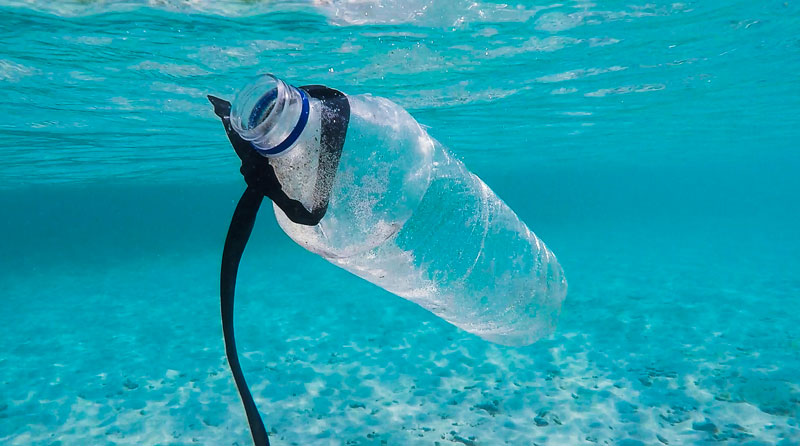
Plastic , as long as it is properly sorted and truly sent to a recycling center, cannot produce identical objects, which is the very definition of recycling. A glass bottle creates a new one, but for plastic, not only is the action limited (because by dint of being retransformed, the material degrades and loses certain qualities) but it also requires the contribution of a part of virgin plastic in order to ensure a certain quality to the final product.
Recycled plastic can, however, be transformed into objects or construction materials. Unfortunately, to exist, these "by-products" require additives that prevent further recycling and end up buried or incinerated. It is therefore a second life, but it is the last. Hence the interest in boycotting the purchase of plastic products or products packaged with plastic.
Nuclear power plants emit CO2: it’s false!

A majority of French people believe that nuclear power contributes to global warming . In reality, nuclear power emits very little CO2 – less than solar panels – compared to the amount of energy it produces. This electricity production, due to the fission of uranium atoms, produces heat that changes water into steam, steam that drives a turbine connected to an alternator, which itself produces electricity. There is therefore no combustion. The construction and maintenance of power plants as well as the extraction of uranium emit a little CO2, as with all renewable energies , but overall, nuclear power is a clean energy.
The IPCC (International Panel on Climate Change) even considers the development of nuclear energy as a solution to combat global warming! On the other hand, radioactive waste, which can be dangerous, is treated and subject to very strict regulations to avoid any contamination.
Eating organic preserves the soil: it’s false!

Although the AB charter prohibits synthetic pesticides, it authorizes those which come from "natural substances or substances derived from natural substances" and some belonging to a list with a few exceptions (slaked lime, paraffin oil which is derived from petroleum, sulfur or even copper sulfate).
Indeed, natural does not mean harmless to humans or devoid of harmful effects on the environment. The specifications therefore target chemical products, but do not prohibit other aspects such as practices that are aggressive to the soil: organic farming can use ploughing just as much as traditional farming, even though it is one of the most disruptive practices for soils and biodiversity.
If we exclude "industrial" organic farming, organic farmers fortunately adhere to a more global and virtuous philosophy even if it is not mentioned in the specifications. To remember, non-organic conservation agriculture which advocates virtuous practices: not plowing the soil, avoiding bare soil by sowing a "vegetable cover", which prevents it from degrading and losing its precious organic matter. Unfortunately, it requires the use of glyphosate between two seeds to remove this cover.
To do it right, organic farming should be combined with good soil conservation practices: measuring organic matter in the soil, the presence of earthworms, crop rotation and diversity, which some already call ABC, organic conservation agriculture. The agriculture of tomorrow?
Electric cars do not pollute: that’s false!

Electric cars do not necessarily pollute less than gasoline cars. And they pollute differently.
It is first of all because of its batteries - which require rare metals to function - that the construction of the electric car is polluting.
Then, even if the engine does not emit pollution when the car is running, the electricity needed to operate it can come from more or less polluting sources, such as:
- fossil fuels (such as coal, oil and gas)
- green or “decarbonized” energies such as nuclear, hydraulic or renewable energies (solar, wind, geothermal, biomass, etc.) which emit very few greenhouse gases.
Each country uses a mixture of these energies to produce all of its electricity. Thus, an electric car recharged in France, where electricity is produced 75% from nuclear energy, involves very low CO2 emissions. On the other hand, an electric car in China or India consumes electricity produced mainly from coal, the most polluting energy in terms of CO2 and fine particles.
A petrol or diesel car pollutes a little less during its construction, but much more throughout its use.

5 zero waste influencers
The zero waste lifestyle requires a real transition, as our (bad) habits need to be revisited and our reflexes need to be changed. It is a long journey to take, but many tips and tricks exist to accompany us on the path to change.
To start, here are 5 zero waste influencers to follow!
Marie zero waste goal

This mother had a lightbulb moment when her children were born. A follower of the hummingbird legend, she decided to change her way of life: every little gesture counts, even the smallest, when it is multiplied by 7 billion humans!
We love her very pragmatic blog, which explains the 7 steps that led her on the path to eco-responsibility :
- Stop plastic bottles
- Stop the paper towel
- Embrace second-hand clothing
- Take inventory of your cupboards and turn to bulk goods
- Empty your stock of cosmetics in your bathroom and gradually replace them with eco-friendly alternatives
- Adopt black soap, Marseille soap and white vinegar to replace your household products
- Home cooking using batch cooking (cooking for several days to save time). She also gives many cooking recipes, full of tips and covers all subjects in alternative mode.
An accessible and easy to implement program, especially when shared. The emphasis is on the importance of involving the whole family in this process so that it is a real collective life choice.
Instagram: @marie.objectifzerodechet | Website: Marie Zero Waste
It's the spirit of the times

We have selected these 2 sisters who are reclaiming their consumption patterns and cover all subjects: fromfood to well-being, including decoration , gifts, children , cleaning and fashion. Their IG account is full of tips, especially for getting rid of fast fashion. And you will like the guilt-free tone, because nobody is perfect ☺. They have also opened a blog, and offer for €10 a very informative e-book with a real methodology for moving towards the zero waste transition. They have even gone so far as to produce eco-responsible t-shirts.
Instagram: @c.lairdutemps | Website: C l'air du temps
Lilyfairly

This 30-year-old Parisian activist, Mélanie, originally a botanist gardener and guide, became a minimalist and a fan of recycling when she realized how much she had accumulated objects that were of no use to her during a move. She then started a blog on environmental issues and zero waste. Today, she addresses many other subjects such as feminism or equality and sharing. She talks about vegetarian food and ethical fashion . We love her benevolent tone (she is very forgiving towards imperfections) and the aesthetics of her Instagram page. One of her many tips that we recommend: cooking your peelings! That's 137kg of food wasted per year and per person in France, according to Global Gâchis.
Instagram: @lilyfairly | Website: Lily Fairly
My slow green life

A thirty-something Parisian living in Tours, Chloé has also really questioned her lifestyle. In addition to her blog dedicated to the art of Slow living, she has also written a book, “Une toute année zéro déchet” (A Whole Year of Zero Waste). She gives tips for reusing objects or choosing multifunctional ones. She covers a wide range of topics in a very practical way, from cooking recipes to home maintenance, including animals. Every day, she publishes on his blog a little info for a zero waste lifestyle, it's his #challengezerodechet with 100 tips.
We also love his Blogroll, the list of all his favorite blogs, which is a mine of information and which also shows his super generous state of mind ☺
Instagram: @myslowlifegreen | Website: My slow life green
Small gestures

We are fans of the way she presents herself: “Inès, imperfect ecologist!”
His credo? We don't need to be perfect, we need to be numerous.
His fights? Ecology and children's rights.
She is guilt-free and just wants to raise awareness of a more sustainable daily life, with kindness and without constraints. It was after a long trip to Australia and Asia that she returned very shocked by plastic pollution. She then decided to adopt a more responsible lifestyle . She opened her blog which gives all the tips and recipes for zero waste, informs with its "Eco news" section, and launches challenges on the theme "MPGDG: my small gesture will become big". She has also written 2 books My beauty products (I do everything myself, 50 recipes) and My household products (I do everything myself, 50 recipes).
Instagram: @lespetitsgestes | Website: Les petits gestes

Are renewable energies really less polluting?
Solar, wind, geothermal, biomass… Renewable energies promise to produce electricity without emitting CO2 , unlike fossil fuels such as oil and coal, and thus limit global warming . Are these renewable energies really the right solution for a “cleaner” planet?
Renewable energies and energy transition
Solar, wind, hydraulic, geothermal and biomass (burning waste) energy are so-called renewable energies or ENRi, because they are inexhaustible on a human scale. All these energies, as well as nuclear energy, are said to be decarbonized, that is to say that they generate very little CO2 for a cleaner planet .
The energy transition is the shift from polluting and CO2 -emitting energies to less polluting energies. This transition attempts to electrify technologies as much as possible (today, we use oil and gas much more than electricity), to produce this electricity without carbon to reduce CO2 emissions, and above all to improve technologies so that machines consume less energy. The energy transition is therefore the transformation of our energy consumption towards less polluting sources in order to limit global warming which threatens the planet.
CO2 , enemy number 1?
When we talk about energy transition, we always talk about transition to renewable electricity. Indeed, in the face of global warming, the number one enemy of pollution is carbon, one of the main greenhouse gases ( CO2 , methane).
If we compare the rate of CO2 emitted for the same quantity of electricity produced at a power station for each energy source:
- coal emits 1000g of CO2 to provide 1 KWh (kilowatt hour)
- natural gas, 400g of CO2
- hydroelectric dams, from 6 to 140g of CO2
- solar 55g of CO2
- geothermal energy 45g of CO2
- wind 14g of CO2
- and finally the anti- CO2 champion, nuclear power which only emits 6g of CO2 to provide the equivalent of 1 KWh.
If renewable energies seem to be the solution to reduce CO2 emissions, this implies above all reducing our dependence on oil and coal, in favor of nuclear power which does not contribute to global warming.
The key role of nuclear power

The energy transition aims to get rid of fossil fuels as much as possible, first coal, then oil and gas. A very ambitious goal because these energies, which are very important in daily life, also play a crucial role in the financial balance of the planet. This is the whole difficulty of this energy transition. It must massively develop renewable energies (in priority in countries that have a lot of wind and sun) while sparing nuclear power which allows the switch to be made smoothly. This transition must also avoid constraints and restrictions that risk weighing on populations. It is the combination of nuclear + renewable energies that will allow an efficient and comfortable transition.
Are renewable energies polluting?
Solar and wind farms must be built massively, which generates many polluting effects. Indeed, to transform the renewable resource (sun and wind), it is necessary to build installations (solar panels and wind turbines) which require thousands of tons of materials (concrete, cement, steel, glass, rare metals, etc.). In the end, this program will require 10 to 15 times more materials than for nuclear power at the same power produced. However, these materials are non-renewable resources since they have consumed energy and polluted the environment to be extracted, then transformed. Not to mention their manufacturing process which uses fossil fuels and therefore emits CO2 upstream.
What about the footprint? In other words, what is the average land area that will be occupied, so how much natural land will be destroyed for the same amount of energy produced: hydraulic 180km2, solar 170km2, coal 80km2, geothermal 50km2, and below 5km2: wind, gas, and finally nuclear which is always in the best position. The development of renewable resources is not without consequences.
Limits to renewable energy

First, most renewable energies, whether solar, wind or hydro, produce only electricity. But electricity is not the only energy used.
In France, electricity only represents 25% of the energy consumed, we need a lot of oil (for transport, industry, agriculture and housing), but also gas and even coal. Clean electricity is good (we already have some in France with nuclear and hydroelectricity), but it does not solve the whole problem. Be aware that there is still 68% of fossil energy directly consumed that will have to be replaced as much as possible by electricity, provided that it is decarbonized, therefore nuclear or renewable.
Why are renewable energies insufficient?
Because of their "intermittent" operation and their low efficiency. Whether solar or wind, these energy sources are insufficient to cover the demand for electricity on their own. Indeed, they depend on the sun for one, only available during the day, and depending on the weather, and on the wind for the other, which also blows randomly. Their production is therefore variable and relatively unpredictable.
It is impossible to see France's main electricity production system, which is also intermittent, with frequent power cuts. This is why ENRi still needs on-demand energy production systems, such as thermal (gas/coal), nuclear and hydraulic power stations, which can produce electricity quickly if needs increase massively.
Conclusion, ENRi are not the unique and perfect solution to replace all other energy production systems.
A major problem, storage

In this "all renewable" and "all electric" scenario, the problem is the storage of electricity to solve the problem of the intermittency of these sources. At present, this minimal storage is done via batteries (generally "Lithium-ion") which are unfortunately very polluting during manufacture and at the end of their life.
So how can we store large quantities without causing an ecological disaster in the future? Pumped storage plants or "STEP" (specific hydroelectric dams). This is the only large-scale, non-energy-intensive storage solution today that could well become a sector of the future, even though it has existed for a long time. These special plants are technically capable of storing surpluses and filling the deficits of tomorrow's intermittent renewable energies.
A major problem remains: the massive increase in the number of these dams will lead to the displacement of populations.
Should we stop nuclear power?
In France, it would be an aberration to deprive ourselves of nuclear power plants that produce about 70% of our electricity without CO2 , and this, to fight against CO2 emissions and replace fossil fuels! Indeed, we would then be forced to replace these plants with other controllable, non-intermittent systems, in other words gas (coal being almost banned).
Germany had this experience about ten years ago. This country wanted to phase out nuclear power in favor of renewable energy. Result? Germany is now the European champion of CO2 emissions, because it had no choice but to rely on coal and gas to compensate for the intermittency of its wind turbines, and meet the growing demand for electricity from its population.
How to optimize renewable energies?
The solution? Consume different energy sources depending on where they are used to find the best "energy mix" for each country. In France, electricity only represents 23 to 25% of our energy consumption and the majority of the energy used (especially for cars and heating) comes from oil and fossil fuels.
And as we have seen, these are the ones that pollute the most. More than the transformation of energy sources, it is the reduction of the consumption of these fossil fuels that is the real challenge of the energy transition.
Energy sobriety above all

Getting rid of oil, gas and fuel oil is proving extremely complicated. Converting the car fleet to electric requires infrastructure to recharge the cars, a lot of resources for the batteries. And what's more, if all French people drove an electric car , we would have to produce a lot more electricity. And producing a lot of electricity with renewable energies is a problem.
This explains why experts believe that the most important objective in the energy transition is first of all the reduction of energy needs (especially car travel and heating).
What are the risks of all-electric?

The energy strategy pursued by the European Union at present promotes intermittent renewable energies to replace coal first, then gas, and also nuclear in parallel (depending on the country).
This programme is likely to cause major energy and resource supply problems in the coming decades. This is already the case in some Nordic countries that have switched to electric cars en masse and have had to face shortages.
The question can be asked for France, which is continuing its policy of closing certain nuclear power plants in order to replace them with ENRi. Indeed, the massive electrification imposed by widespread decarbonization, particularly in transport, is leading to an ever-increasing demand for electricity.
If renewable energies are essential for the energy and especially ecological transition, none are perfect. Hence the interest in diversifying these energies and maintaining nuclear power for its low CO2 emissions, versus high efficiency. But above all, the transition to renewables must be accompanied by a significant reduction in energy needs, which requires awareness and a change in lifestyle on the part of everyone.